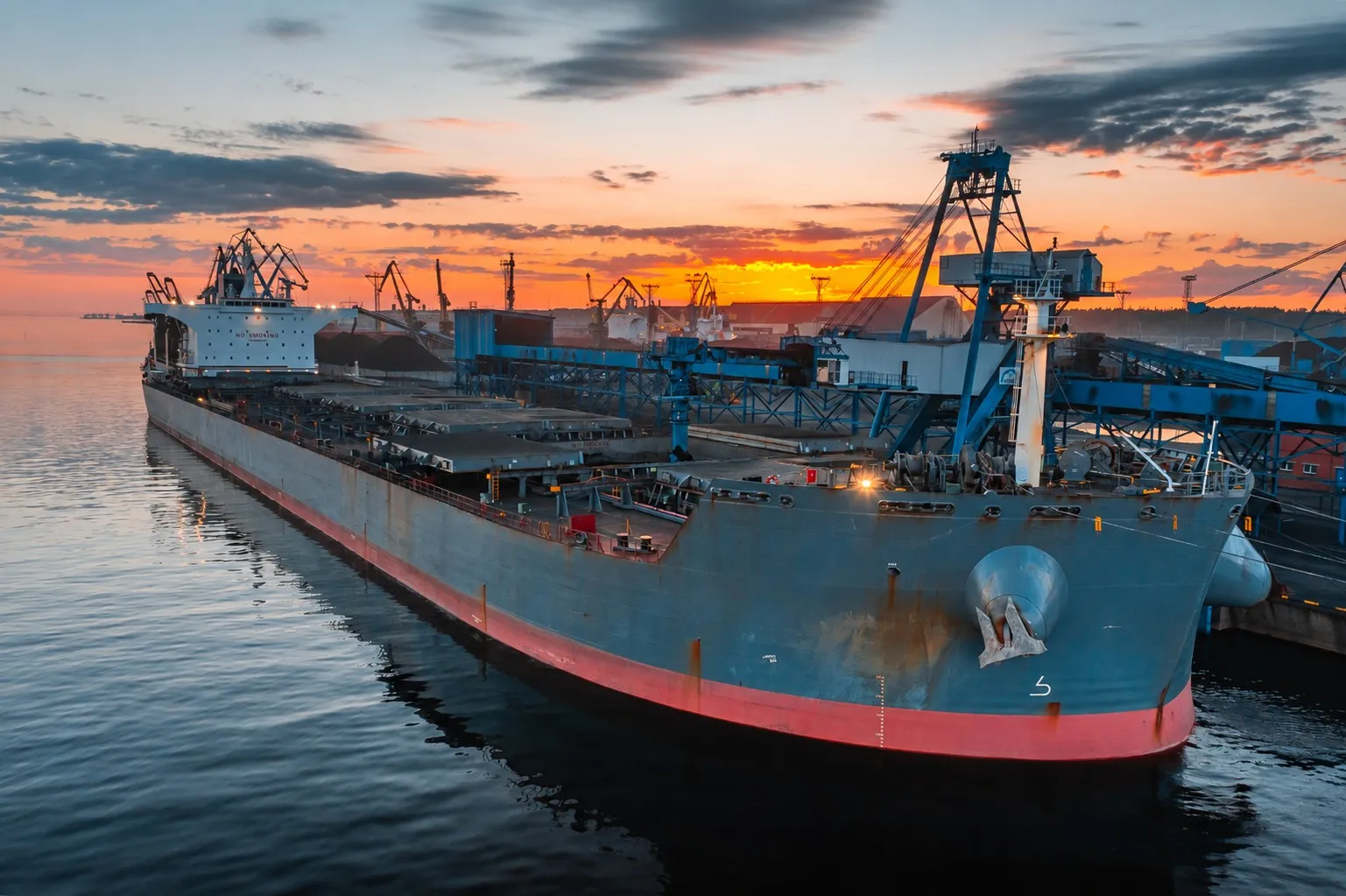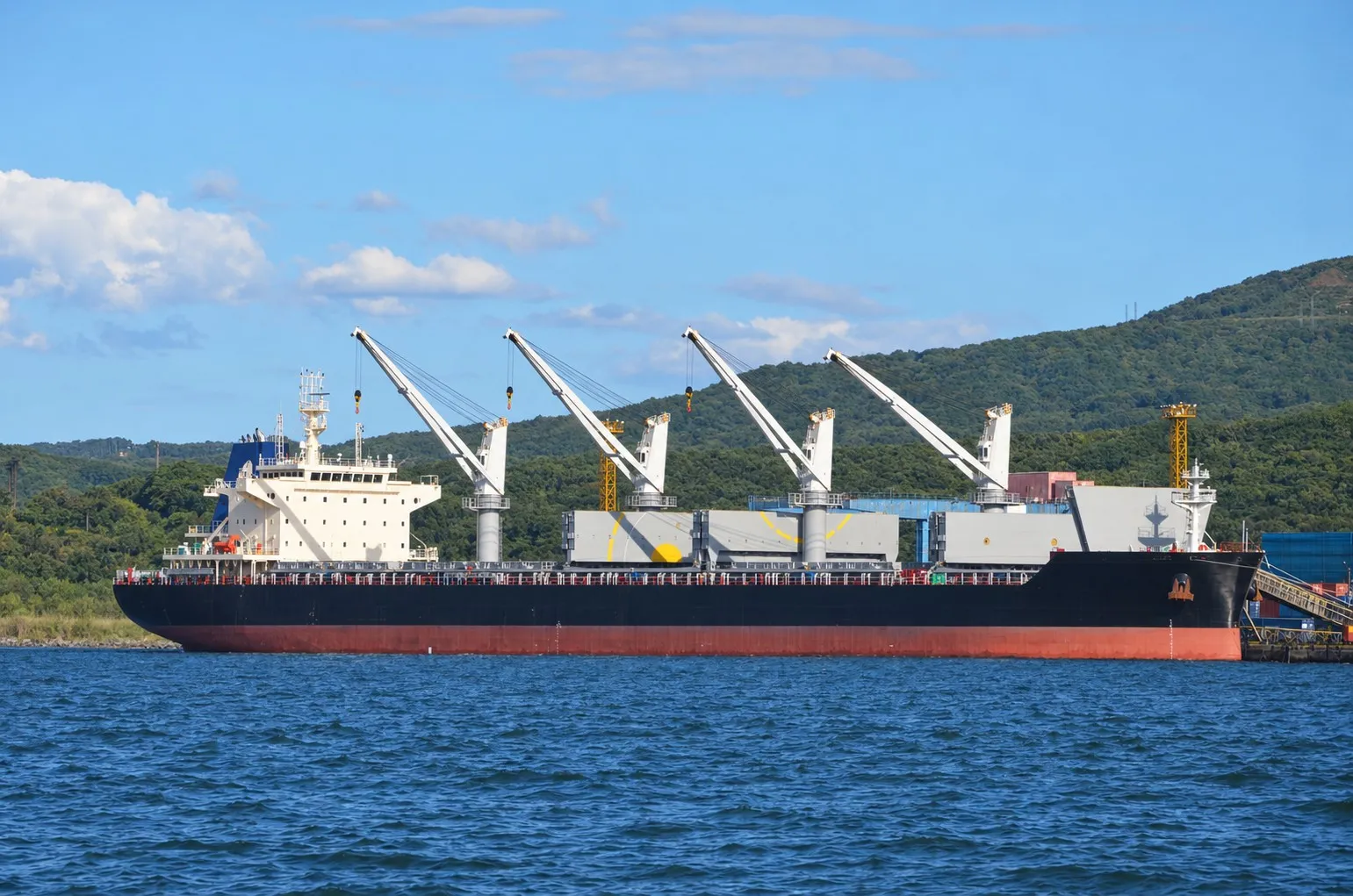


Russian coal exports to Turkey declined sharply in January-September 2026 as Black Sea shipping disruption and growing rail constraints reduced available supply.
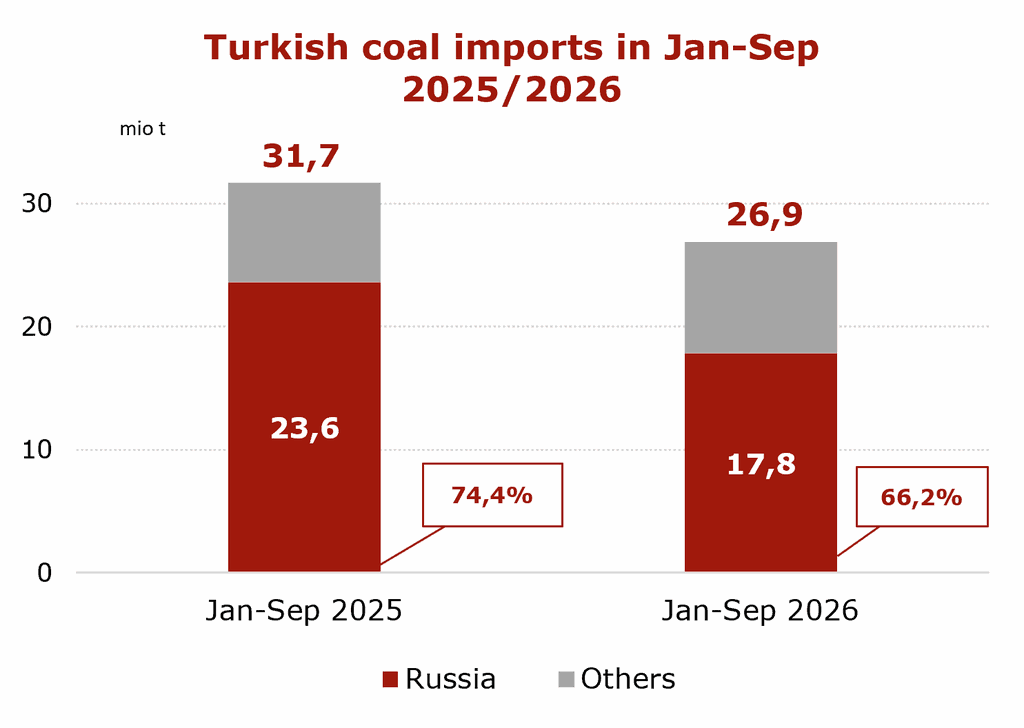
In January-September 2026 Russian coal exports to Turkey dropped to 17.8 mio t (-5.8 mio t or -24.6% y-o-y).
Meanwhile, in Jan-Sep 2026, Turkey’s total coal imports, including thermal coal, coking coal and anthracite, fell to 26.9 mio t (-4.8 mio t or -15.1% y-o-y).
In Jan-Sep 2026, Colombian deliveries to Turkey totaled 2.8 mio t (-6.7% y-o-y), while Kazakhstan boosted its coal supplies to 2.2 mio t (+69.0% y-o-y). Shipments from the US surged to 2.3 mio t (+43.8%).
Russia’s share in Turkey’s coal imports decreased by 8.3 percentage points to 66.2% in Jan-Sep 2026 (vs. 74.4% y-o-y).
The suspension of shipments from ports in the Azov–Black Sea basin remains a key factor putting pressure on coal supplies. Exports of Russian and Kazakh coal via terminals in this region have effectively ceased since August 2026, following attacks by Ukrainian drones on commercial vessels.
Shippers redirected tonnages to ports in the North-West; however, the capacity of this route is constrained by existing utilization rates, infrastructure limitations, and the prioritization of grain shipments from October 01, 2026.
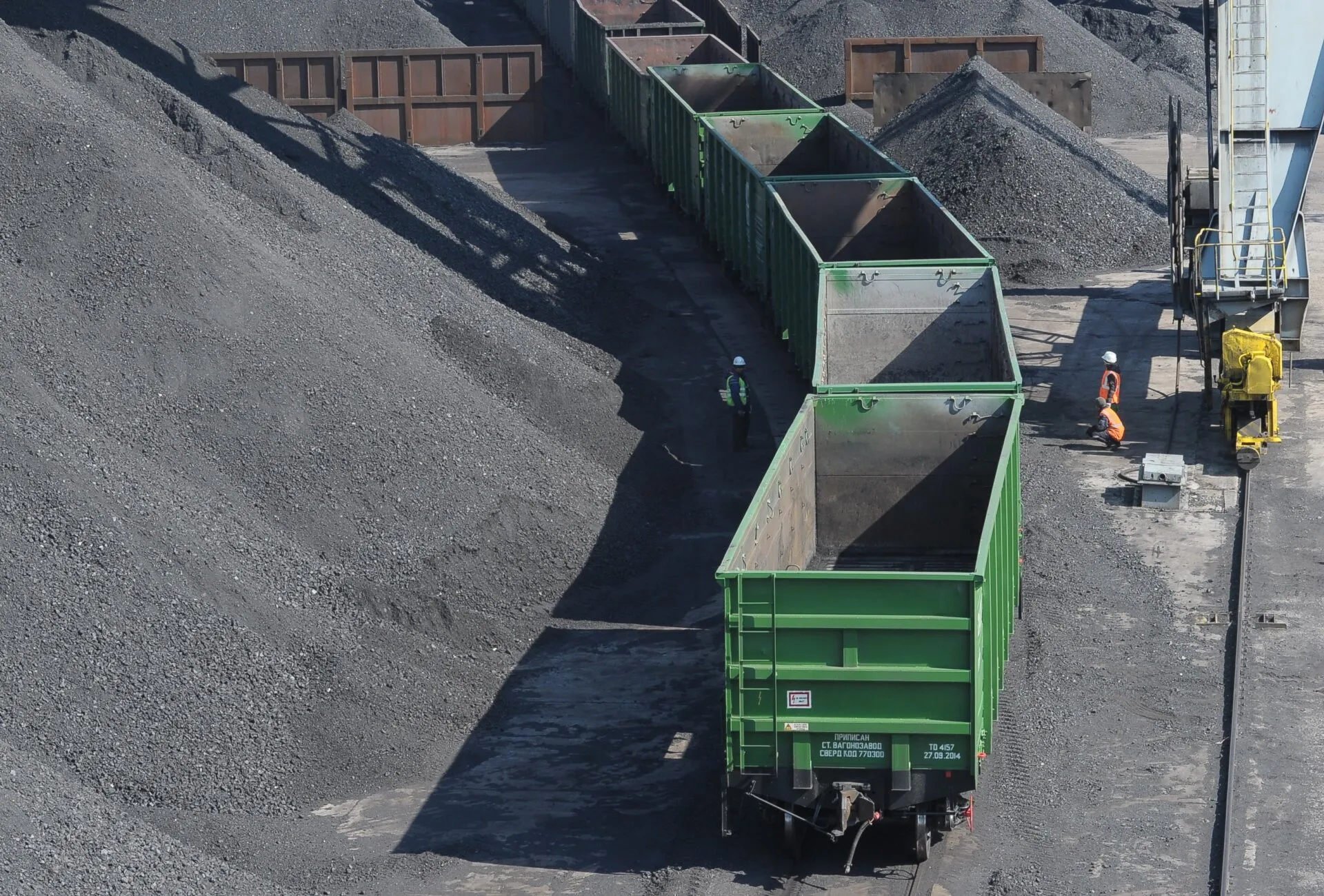
Because of congestion on the north-western rail network, Russian Railways (RZD) did not approve a single application for the transit of Kazakh coal by rail to Baltic Sea terminals for October and November. The restrictions also affected Russian shippers: for November, RZD approved only 55% of applications for coal deliveries to Ust-Luga.
The capacity of Baltic stevedoring companies makes it possible to ramp up transshipment, nevertheless, the throughput capacity of the Oktyabrskaya Railway remains a bottleneck.
These disruptions sent coal prices in Turkey climbing sharply, and traders expect further upside in the near term as supply tightens and uncertainty over shipping security persists. Furthermore, transshipment rates at Baltic ports and freight costs have also significantly increased.
Current situation carries the risk of reducing coal exports’ share in the key remaining markets for Russian suppliers, including the Turkish market, where since 2022 Russian coal has successfully replaced Colombia as the main supplier.
Source: CCA