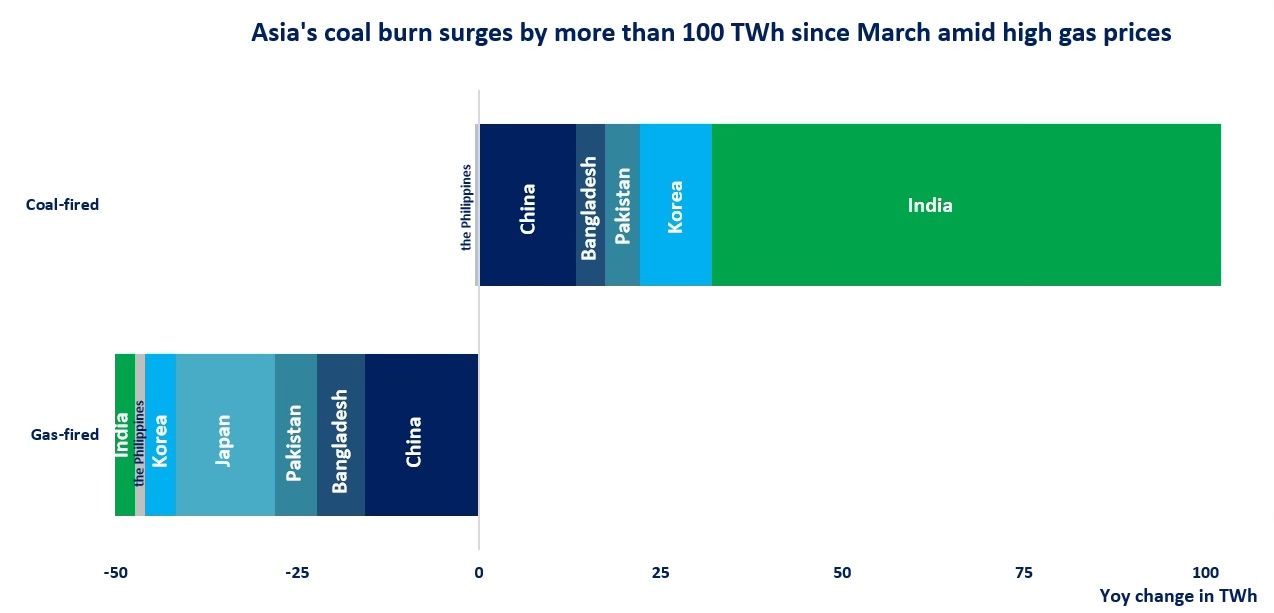
Global coal prices strengthened over the past week as European, South African, Indonesian and Australian thermal coal markets gained support from supply risks and higher energy prices.
Price gains prevailed in the coal market over the past week. Indices in Europe rose; South African and Colombian coal became more expensive; in Australia, thermal coal quotations climbed, while metallurgical material declined.
European thermal coal indices were trading at 143-145 USD/t over the past week, reaching a 3-year high amid rising gas and oil indices on expectations of an escalation in the US-Iran conflict. Several oil and gas company executives simultaneously declared an energy crisis in Europe due to low gas inventories (10% below year-ago levels — see below) and oil.
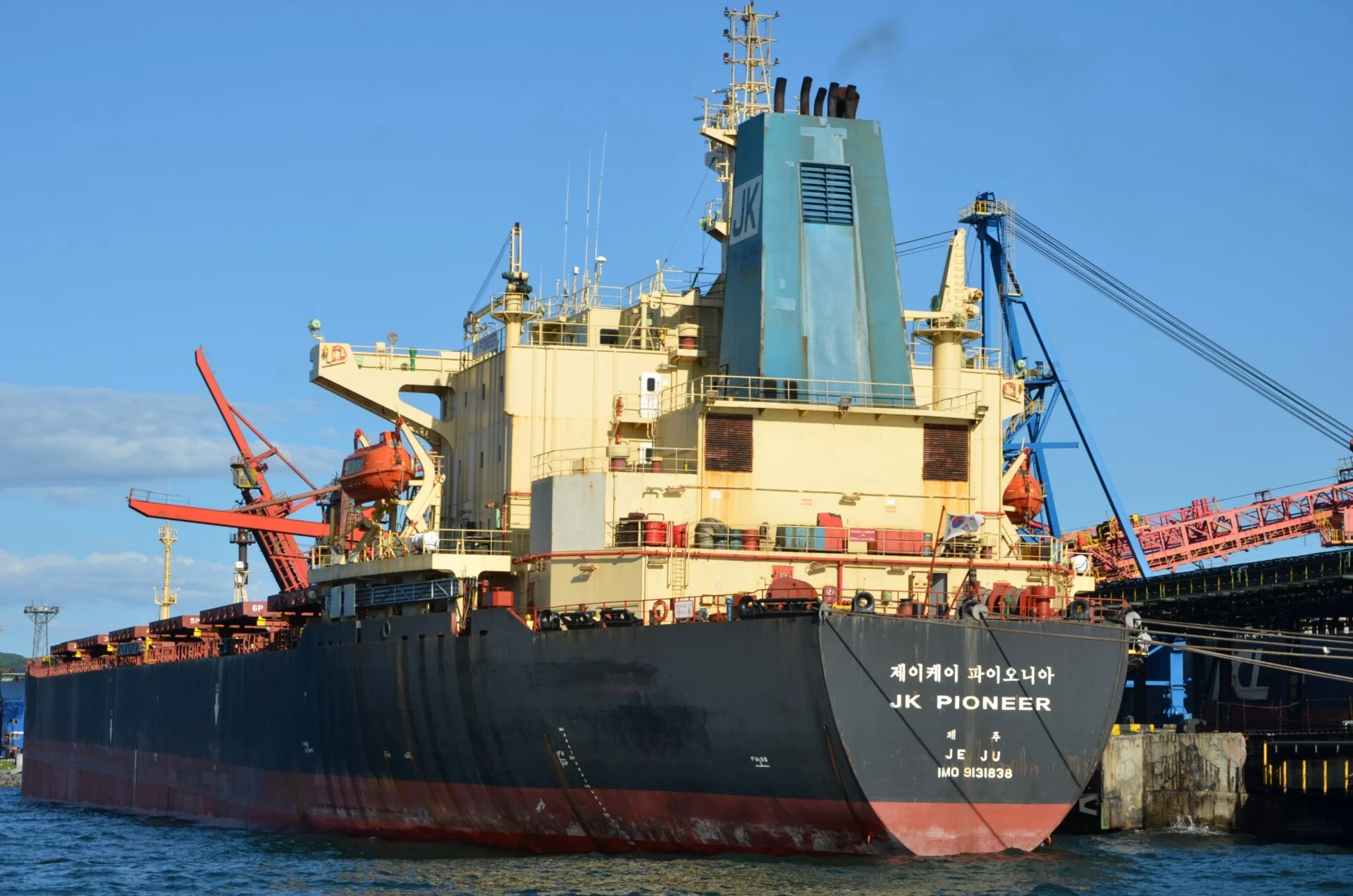
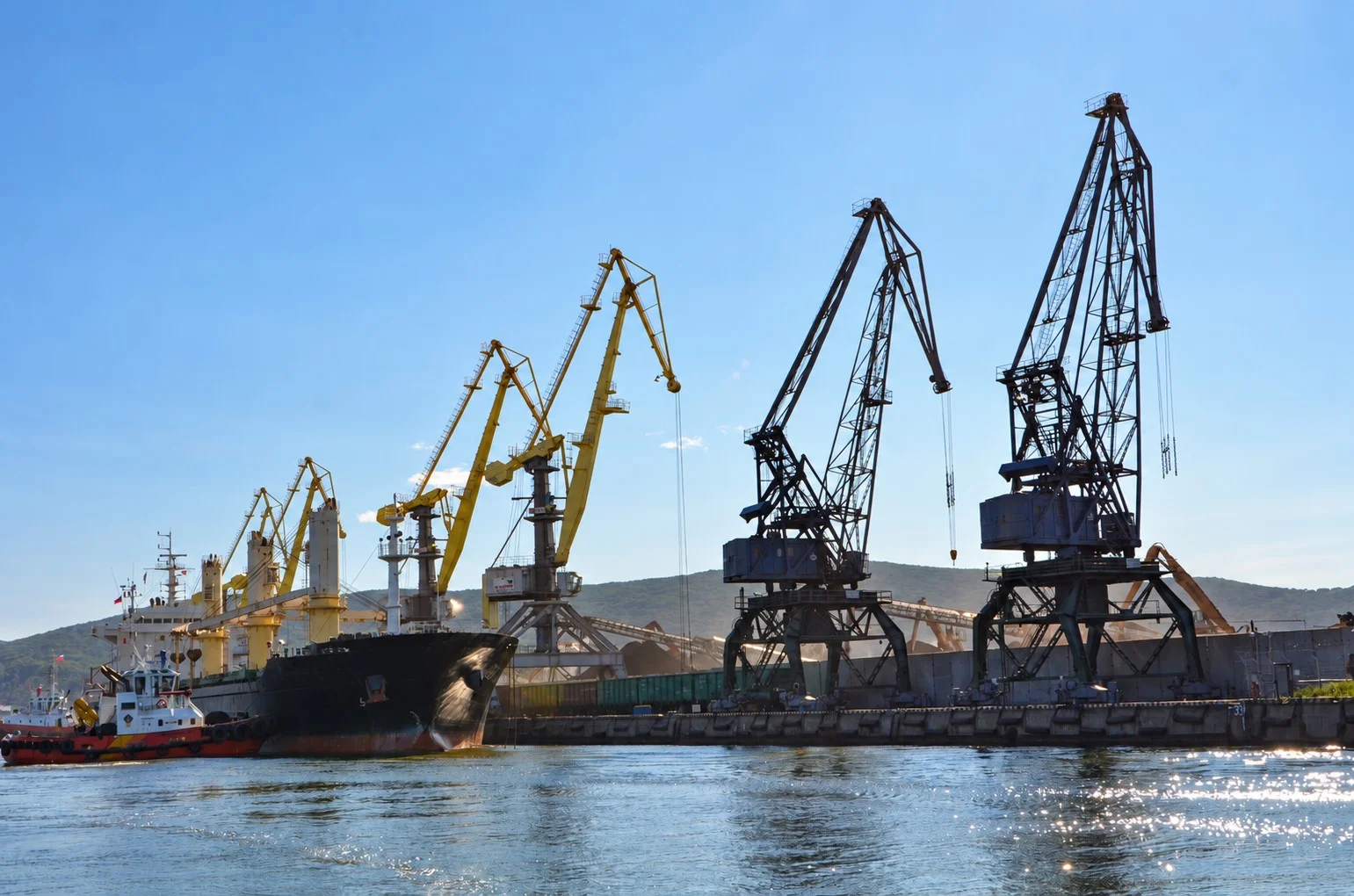
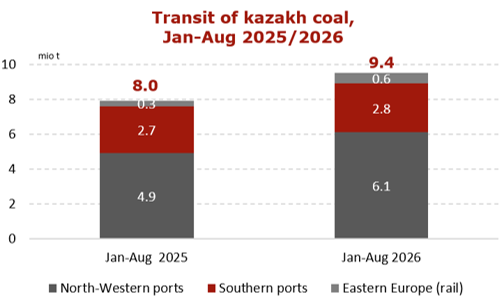
European quotations are also finding support from falling coal supplies from Kazakhstan and Russia, caused by Ukrainian drone attacks on dry bulk carriers in the Black Sea, which are redirecting coal volumes to northwestern ports and constraining transit of Kazakh material. Additionally, coal shipments are being limited by priority transportation of grain and other cargoes to Northwestern terminals. The volume of coal lost for the global market is estimated at 3 mio t per month.
Gas quotations on the TTF hub as of October 8, 2026 surged to 899.18 USD/1,000 m3 (+52.76 USD/1,000 m3 w-o-w). Total EU underground gas storage stood at 72.8% (+1.5 ppts w-o-w), 10.2 ppts below last year’s level of 83%.
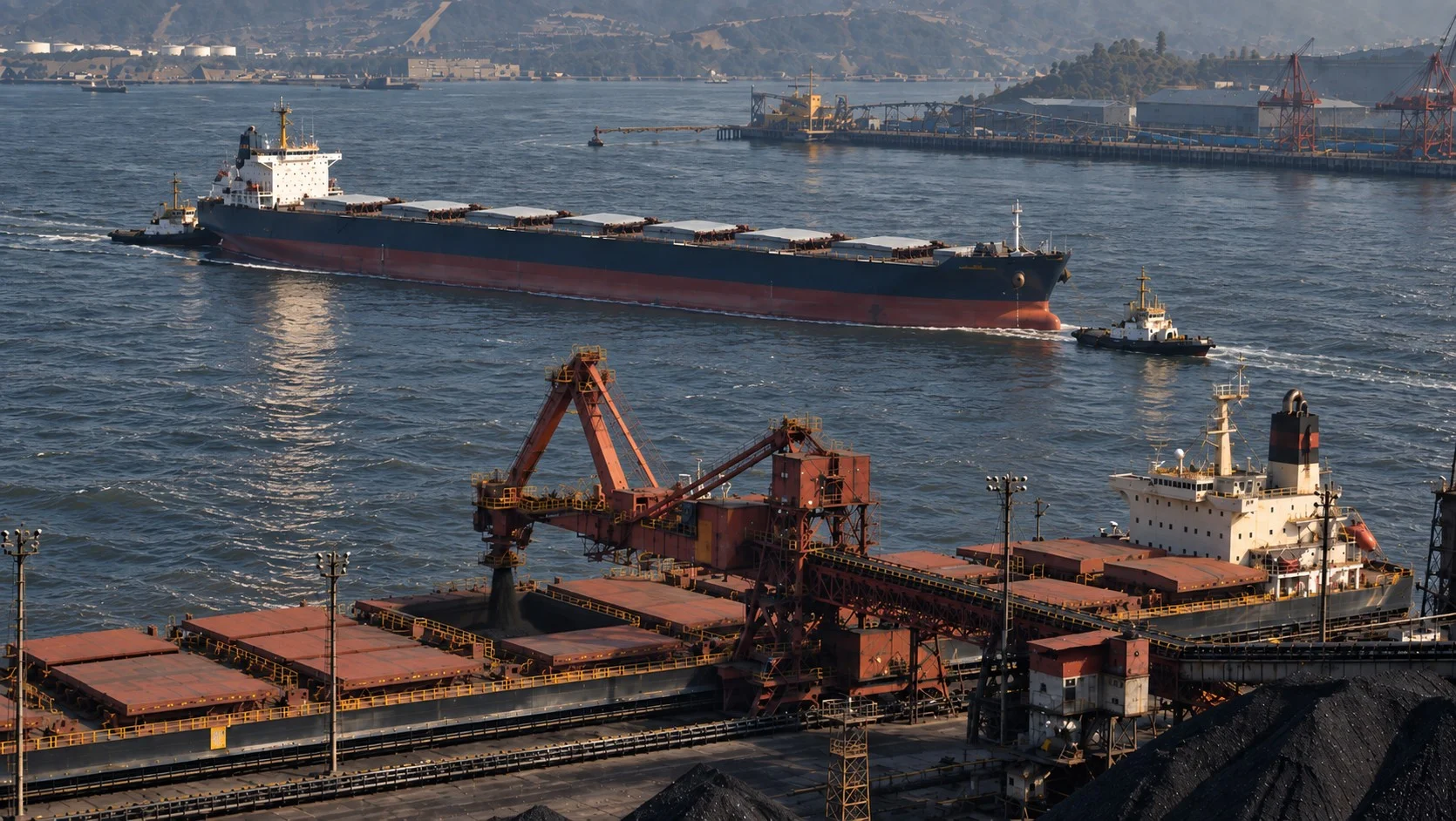
South African High-CV 6,000 also strengthened above 126 USD/t, following the European market. The Richards Bay export terminal is experiencing a heavy schedule in October: average vessel queues have grown to nearly 10 days from a maximum of 2 previously because of the bad weather that slowed loading. South African thermal coal quotations were also pushed higher by reduced domestic industrial supply in India and depleted port inventories.
Truck freight rates for bulk cargoes in South Africa (including coal) continue to rise on higher diesel prices driven by the Middle East war. In September, diesel rose 10% month-on-month, with a further 9% increase expected in October, significantly raising logistics costs.
MC Mining is entering a critical period at its flagship Makhado project, which after 13 years of development is set to produce its first saleable product in October (first phase — around 770k t/year of coking coal, with expansion under consideration for an additional 605k t/year of coking coal and 800k t/year of thermal coal).
However, the company remains loss-making due to the suspension of the Uitkomst mine and depends on financing from Kinetic Development Group, without which significant uncertainty over going-concern status persists.
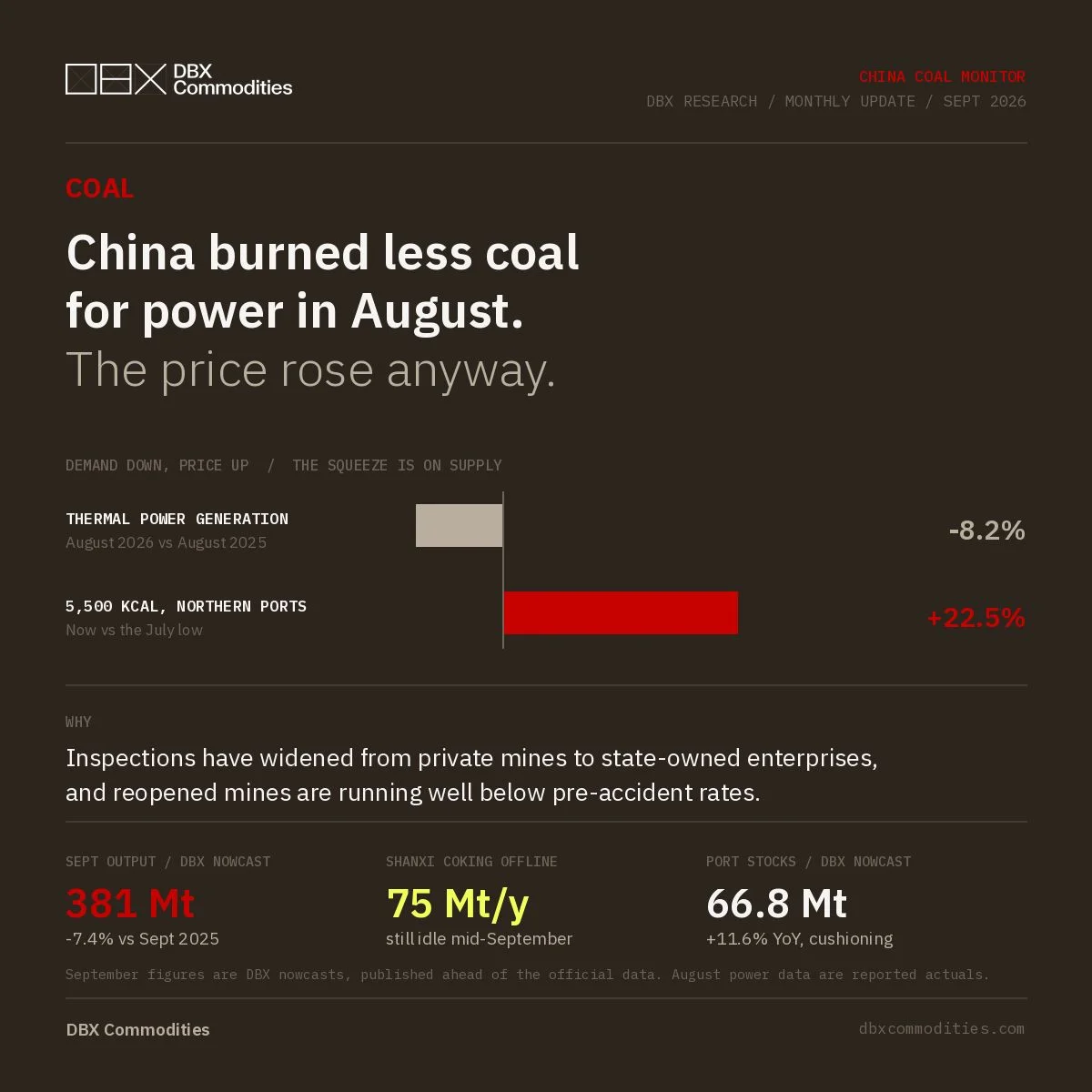
In China, the coal market remained closed for the National Day holiday within October 1–7, 2026. Meanwhile, the 20-day scheduled maintenance on the Daqin rail line, that has now begun, expected to reduce coal deliveries to Bohai Bay ports and could support prices once trading resumes.
Indonesian 5,900 GAR exceeded 118 USD/t, while the price of 4,200 GAR rose to 76.5 USD/t.
Cargo transshipment activity in parts of Kalimantan improved somewhat amid rising river levels, though overall conditions remain unfavorable for loading.
Chinese traders, despite the holidays in China, were in search of Indonesian-origin cargoes, particularly low-CV coal, while end-users were away for the break. Significant demand was observed for Indonesian mid-CV coal amid limited supply: Bangladesh held tenders for such coal, and cement companies in the Philippines sought high-CV coal with high sulfur content.
Indonesian mining companies focused on RKAB quota applications for 2027, preferring to refrain from long-term contracts. Several producers maintained consistently high premiums to existing offer prices.
The new Indonesian state company DSI, according to statements by its head Luk Mahoni, intends to move from monitoring to controlling the entire coal supply chain through to delivery in the importing country, including combating invoice under-valuation and non-repatriation of revenue, and potentially — under its 5-year plan — to the role of exporter on behalf of Indonesia. This is raising alarm among international end-users and private Indonesian coal companies and could lead to restricted export volumes.
Australian High-CV 6,000 rose to 149-150 USD/t, driven by concerns over the Strait of Hormuz situation and broad gains across energy markets.
Australian authorities raised their thermal coal export revenue forecast but lowered their volume forecast to 209 mio t in fiscal 2027 (-4 mio t vs. the December forecast) and 202 mio t in 2027–2028 (unchanged). Authorities note that demand growth from Northeast Asian consumers due to high LNG prices is supporting NEWC quotations (forecast of 130 USD/t FOB for all of 2026 and 119 USD/t FOB for 2027).
Imports to China for 2026 were revised down to 345 mio t (-27 mio t vs. 2025) amid growth in renewable generation; imports to India to 171–173 mio t (-7–9 mio t vs. 2025); and to Japan to 122 mio t (-3 mio t vs. 2025).
Australia’s HCC metallurgical coal index corrected lower to 271 USD/t, resulting from holidays in China. Trading activity remained subdued also because of limited demand from India.
Participants expect strengthening on the back of rebounding economic activity, while some players do not rule out a correction in the coming days after China’s return and assess Chinese buyer interest for Premium HCC coal at around 260 USD/t FOB Australia or 280 USD/t CFR China.
Source: CCA