The global coal market saw mixed dynamics: prices in Europe reached 4-year lows and rebounded upward; in China, quotations firmed after the holidays; in Australia, High-CV material became cheaper, Medium-CV showed modest gains, while metallurgical coal prices corrected downward.
European thermal coal indices recovered above 97 USD/t, rebounding from the 4-year lows (86.8 USD/t), hit on October 14. The rebound was driven by active covering of accumulated short positions on the paper and physical markets. Nevertheless, some market participants believe prices have bottomed out, anticipating a reversal in indices in the short and medium term. The heating season in Europe started earlier than usual this year, which implies growing coal consumption on the back of positive coal spreads. The early start of the heating season in Europe is stimulating growth in coal consumption amid positive clean dark spreads (CDS).
Gas quotations on the TTF hub rose to 388.31 USD/1,000 m³ (+1.48 USD/1,000 m³ w-o-w). The EU is presumed to be well-prepared for the 2025–2026 winter, however, natural gas storage inventories are significantly lower than at the same time last year and below the 10-year average, while withdrawals have increased substantially. Coal stocks at ARA terminals in Europe climbed to 3.56 mio t (+0.08 mio t or +2% w-o-w).
The South African High-CV 6,000, after hitting December 2020 lows (less than 80 USD/t), retraced to the 81-82 USD/t level following the rise in European quotations. Indian buyers, particularly from the sponge iron sector, barely placed any inquiries on account of available local coal and a weak steel market, as well as because of local national holidays. Consequently, South African exporters shifted their focus to Vietnam and smaller regional markets.
In China, spot prices for 5,500 NAR coal at the port of Qinhuangdao added 2 USD/t to above 101 USD/t. Activity in China’s thermal coal market accelerated after the end of the public holidays. Prices were supported by growing demand, with supply disruptions in some regions and a decline in renewable energy sources, which forced power plants to consume more coal and replenish stocks.
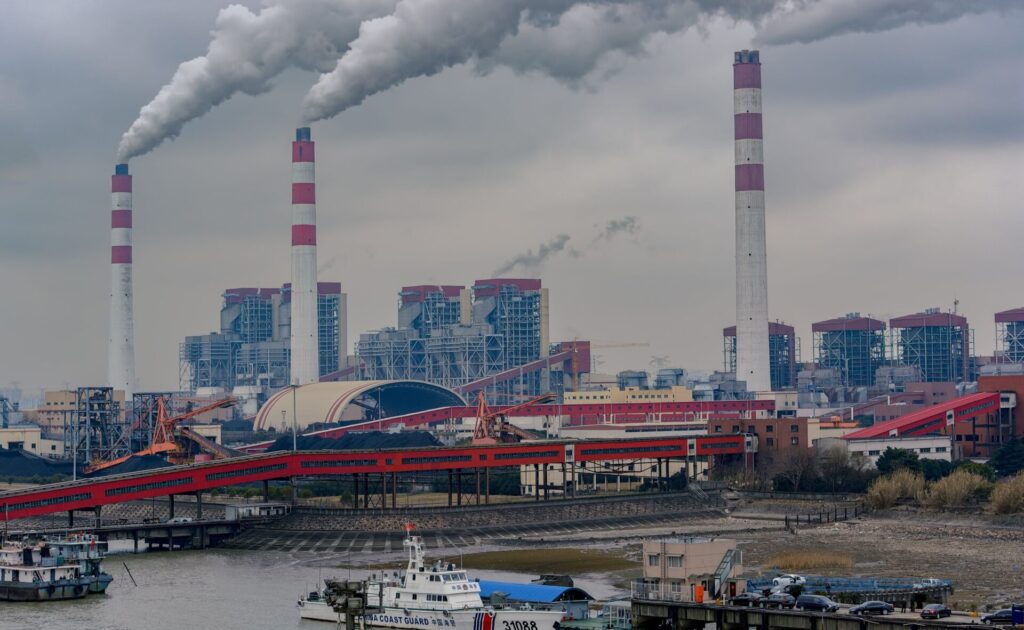
The northern part of the country saw rains and early snow, which disrupted operations at open-pit mines in the mining regions of Inner Mongolia and Shaanxi. In the south, temperatures reached 33–35°C, maintaining high demand for air conditioning and electricity consumption. As a result of this weather anomaly, a record autumn increase in coal-fired generation was recorded: consumption at the country’s largest TPPs rose from 4.1 to 4.9 mio t/day, and at the 6 coastal TPPs – from 1.8 to 2.3 mio t/day.
Inventories at the 9 largest ports decreased to 24.49 mio t (-0.30 mio t w-o-w). Coal stocks at the 6 largest coastal TPPs totaled 13.96 mio t (-0.27 mio t w-o-w), while consumption was up to 857 kt/day (+14 kt/day w-o-w).
Indonesian 5,900 GAR edged down to 76.5 USD/t, whereas the price of 4,200 GAR advanced to nearly 44 USD/t. Market activity in Indonesia gained momentum on the return of Chinese buyers and traders, which provided some support to quotations.
Persistent rains limited mining and logistics: barges were idled, which extended delivery timelines and spurred prices for December shipments. Meanwhile, producers were in no rush to conclude long-term contracts, expecting more favorable levels closer to November.
The Indonesian authorities launched a new online platform for more detailed tracking of the coal industry’s metrics, which should enable regulators to improve control over supply.
Australian High-CV 6,000 corrected downward to 103 USD/t. In the first two weeks of October, Asian buyers (especially Japan and South Korea) showed little activity, while Chinese market participants focused on domestic material after the holidays. Furthermore, Indonesian 6,000 NAR coal was offered 10–15 USD/t cheaper than Australian High-CV.
Australia’s HCC metallurgical coal index dropped to 188 USD/t because of higher supply and falling steel quotations. Prices for hot-rolled coil and rebar in China declined by 2–3%. This reduced blast furnace utilization rates, resulting in lower coal consumption. Demand from India is limited on account of national holidays. Furthermore, shipments through some terminals, including Hay Point and Dalrymple Bay, have returned to normal, given improved weather conditions in Queensland.
Source: CCA Analysis