Global coal prices diverged: European indices strengthened; Chinese spot market softened; Australian quotations were split, with thermal coal falling and metallurgical material breaking through a key level.
Over the past week, European thermal coal indices firmed to 97-98 USD/t. Quotations found support from the November contract closure, active trading on the Intercontinental Exchange (ICE), and strong physical market deals.
Gas quotations declined. Traders factored in stable supply, forecasts for milder temperatures by year-end, and the resumption of Ukraine-related negotiations. Gas quotations on the TTF hub fell to 337.41 USD/1,000 m3 (-11.19 USD/1,000 m3 w-o-w). According to Gas Infrastructure Europe, European underground gas storage (UGS) sites were in withdrawal mode; storage facilities were 74.4% full (77.6% a week earlier).
The EU presented a plan for a complete phase-out of Russian gas. Under the approved plan, imports of Russian LNG will be ceased by Dec. 31, 2026, and pipeline gas by Sep. 30,2027.
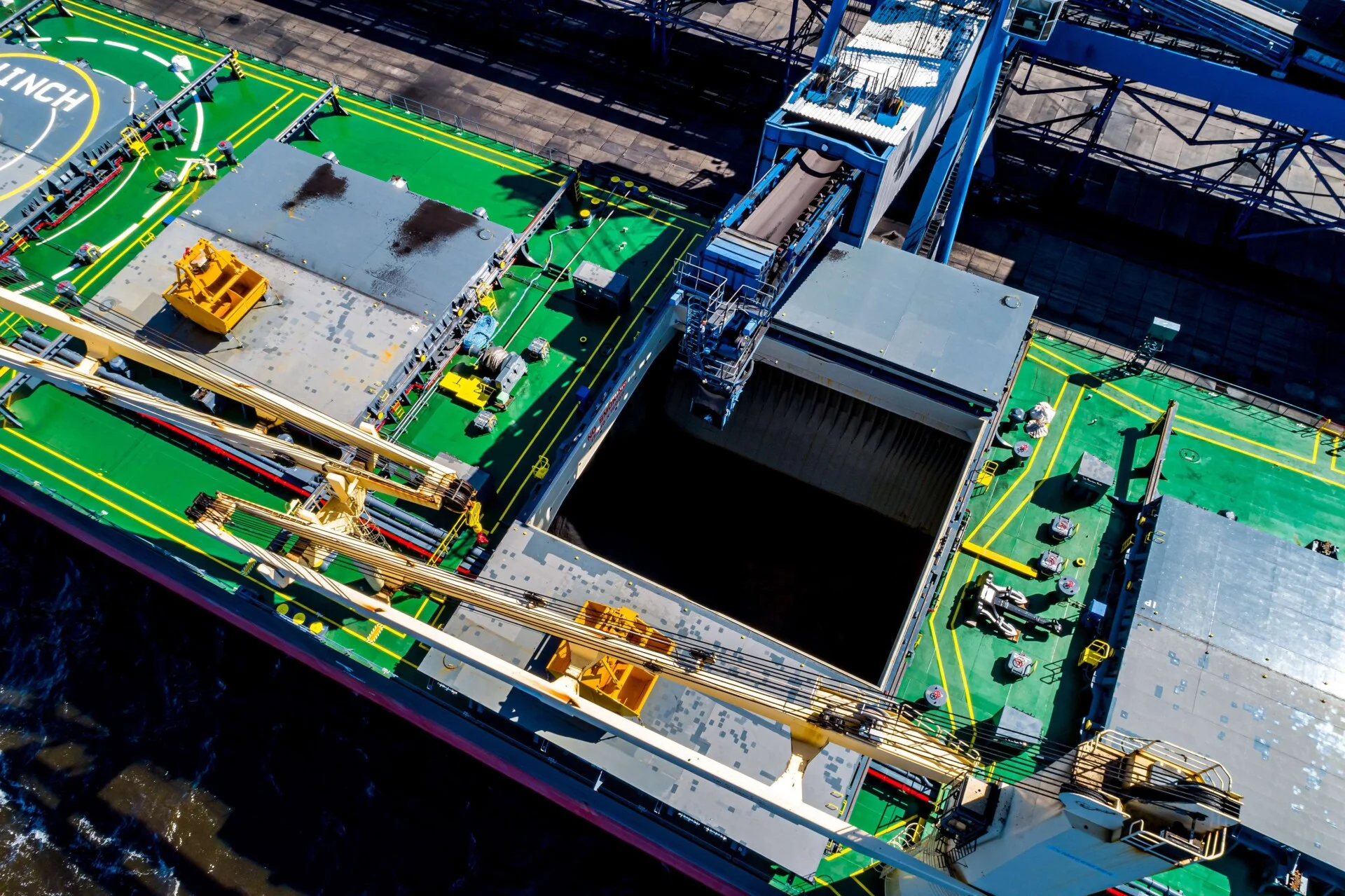
South African High-CV 6,000 advanced to 91-92 USD/t, continuing its upward trend for the sixth consecutive week on the back of improved demand, as well as potential supply constraints stemming from a force majeure at the Richards Bay terminal.
Indian consumers report a shortage of South African Mid-CV 5,500 kcal/kg NAR material. Meanwhile, on December 1, the Transnet Richards Bay Dry Bulk Terminal declared force majeure after destructive winds damaged ship-loading equipment over the weekend.
One of the berths will be temporarily unable to accommodate vessels. The estimated equipment recovery time is two weeks.
Exxaro Resources reduced shipments of thermal coal from the port of Maputo in Mozambique, as low coal prices have made trucking the material to the export hub unprofitable. Instead, Exxaro plans to boost exports via the Richards Bay coal terminal, taking advantage of increased capacity on the Transnet rail network.
In China, spot prices for 5,500 NAR coal at the port of Qinhuangdao dropped to 114-115 USD/t. Major producers faced difficulties selling cargoes at online auctions, with some continuing to lower their prices. End-users primarily focused on fulfilling long-term contracts. Many sectors cut consumption, caused by a slowdown in industrial activity, leading to a build-up of inventories at thermal power plants and northern ports.
Ahead of the annual fair for concluding long-term coal supply contracts for the following year, which takes place from 3 to 5 December in Rizhao (Shandong Province), many buyers also adopted a wait-and-see approach.
In the import market, Chinese energy companies refrained from issuing tenders. Inquiries to traders were for cargoes delivering at the end of January; there was no immediate need for spot shipments, given relatively sufficient stockpiles.
Stocks at 9 major ports increased to 27.25 mio t (+1.10 mio t w-o-w). Inventories at 6 major coastal thermal power plants totalled 14.44 mio t (+0.19 mio t w-o-w), while consumption fell to 780-793k t/day (-13k t/day w-o-w).
Indonesian 5,900 GAR remained at last week’s level of 83 USD/t, while the price of 4,200 GAR declined below 48.5 USD/t.
Sentiment in the Indonesian coal market deteriorated, following the price drop in China. Trading activity decreased, and the market, according to experts, has shifted back into a state of oversupply. Heavy rains and destructive flooding across the archipelago continue to hinder transshipment, however supply constraints are not yet supporting prices.
Australian High-CV 6,000 slipped to 108 USD/t. Demand from buyers in Northeast Asia stabilized after a series of tenders by South Korean energy companies and regional industrial end-users. The anticipated winter spike in spot demand that traders had been counting on has not yet materialized, as winter in the Northern Hemisphere began with mild weather.
Furthermore, downward pressure on coal quotations comes from lower LNG prices in the region. The market is seeing ample supply. Consumer focus has shifted from the spot market towards deliveries for February and March. For instance, Japan had LNG inventories at the end of November that were 20% higher than in November 2024, sufficient to get through the winter period.
Glencore expects high-cost thermal coal producers to be forced to curtail output through the end of this year and into 2026, as a significant portion of seaborne export shipments are unprofitable at current prices.
According to Glencore’s estimates, up to 30% of global seaborne thermal coal supplies are currently loss-making. The curtailments are expected to persist for several more months before the market recovers.
Glencore has set its thermal coal production target for 2026 at 95-100 mio t, compared with 92-97 mio t this year.
Australia’s HCC metallurgical coal index rose above 205 USD/t, surpassing the 200 USD/t mark for the first time since late December last year. Some market participants hold the view that prices have climbed because of tight supply in the premium mid-volatile (PMV) segment, coupled with concerns over potential supply disruptions from forecasts of heavy rains in Australia during December. In a base-case scenario, tight supply is expected to persist until February.
Other experts do not believe in a long-term upward trend and consider the current growth to be rather speculative. Indian buyers have therefore adopted a wait-and-see approach. Furthermore, the demand from Chinese consumers remains weak.
Source: CCA Analysis