Global coal prices showed signs of correction over the past week as Atlantic and Australian thermal coal weakened and Chinese and metallurgical markets lost momentum.
Over the past week, steam coal markets in the Atlantic and Australia declined, while the Chinese coal market is seeing a price reversal. A correction has emerged in premium metallurgical and PCI coal quotations.
In the European coal market, prices dropped below 139 USD/t. Coal quotations declined over the past week, following the gas market. The energy market dynamics were driven by profit-taking sales, speculation regarding gas storage accumulation in Germany (German UGS facilities are currently about 56% full, down from 76% last year), while shipping through the Strait of Hormuz remains restricted.
The possibility of a milder-than-usual winter was in focus, which could lead to reduced gas consumption. This factor has not yet been fully priced in, as the market awaits more reliable weather forecasts.
Coal stocks at ARA terminals as of 13.09.2026 stood at 4.04 mio t, down 65 kt w-o-w. An increase in imports into ARA is expected in early October, when cargoes of coal from Colombia and South Africa arrive in Amsterdam and Rotterdam.
Coal-fired generation in Germany increased during the week of 07.09–13.09 amid a general decline in renewable power output. Clean spark spreads averaged -16 EUR/MWh, while coal dark spreads stood at 43 EUR/MWh after reaching 50 EUR/MWh.
Gas quotations at the TTF hub on 17.09.2026 stood at 928.77 USD/1,000 m3 (-60.24 USD/1,000 m3 vs. 10.09.2026). EU underground gas storage stood at 68.7% (+1.4 ppts), 12.1 ppts below last year’s level of 80.8%.
The South African High-CV 6,000 index fell below 122 USD/t, following the European market.
Stocks at the Richards Bay terminal as of 13.09.2026 rose to 3.72 mio t. Transnet Freight Rail (TFR) delivered 1.44 mio t to the terminal during the week, the highest weekly volume since 2021. The increase in rail volumes partially offset losses resulting from a two-week disruption caused by a train derailment in late August, and also reduced market concerns about material availability, which had been providing support to quotations.
Over the past week, India was the largest importer of South African coal — 434 kt were shipped from RBCT. Indian power companies increased purchases of imported coal due to limited domestic supply, while rising prices at domestic auctions made imports more competitive.
Market participants note that Indian consumers of imported material are fully covered for near-term deliveries, as cargoes were contracted before South African coal prices peaked. The current decline in buying interest should affect RBCT loading volumes in the coming weeks. Indian buyers are currently seeking cargoes with December shipment.
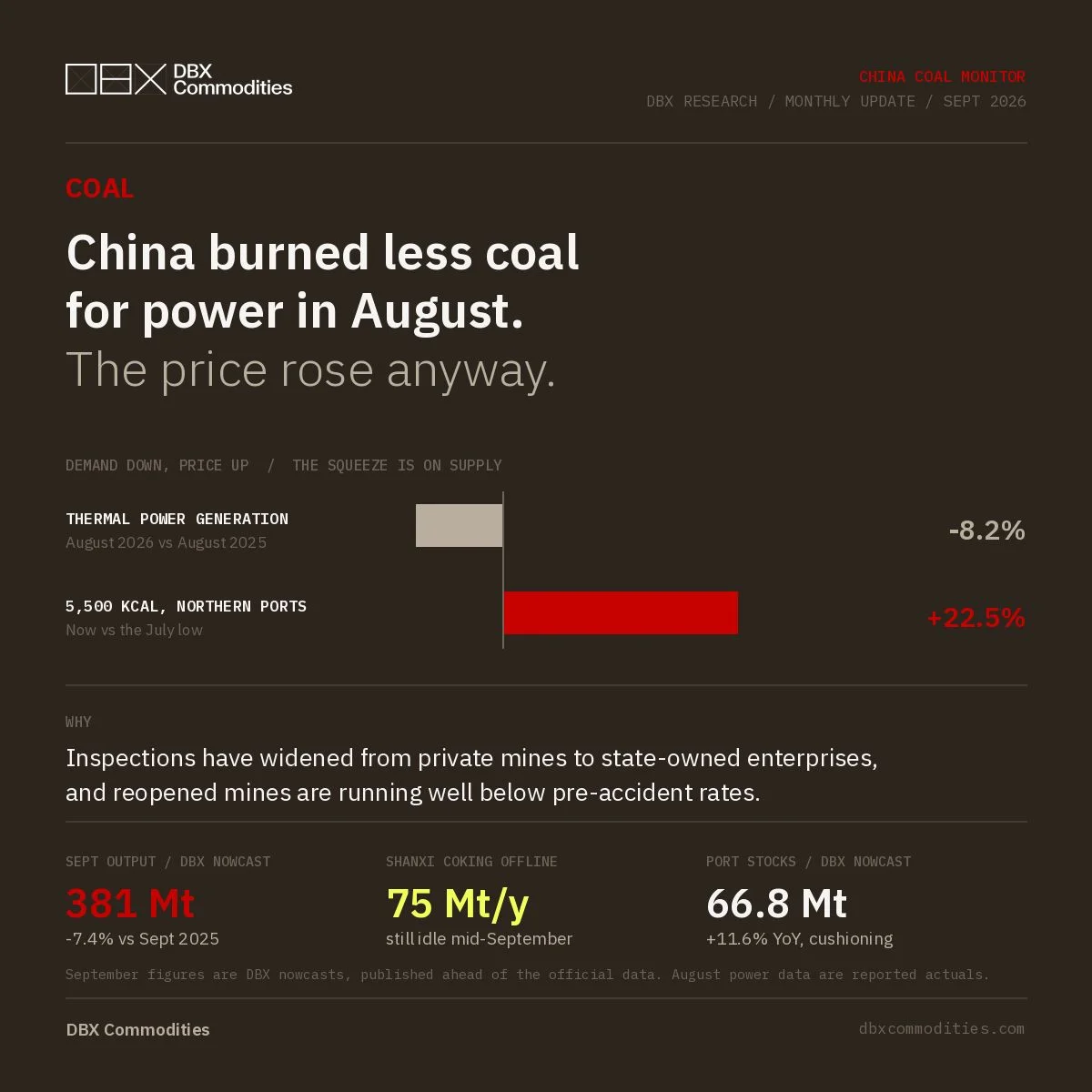
In China’s domestic market, FOB price growth at ports has stalled, and a slow downward movement has begun. Spot FOB Qinhuangdao 5500 NAR edged slightly down to 144.23–145.71 USD/t (975–985 RMB/t) (-0.03 USD/t).
Prices at mining sites, which fell sharply the previous week, showed a slight rebound of 10–20 RMB/t amid a weak increase in demand from metals and chemical producers (the price increase mainly affected high-CV material), as well as tighter safety measures ahead of the autumn holidays (National Day of the PRC, October 1–7).
Differences in priorities between China’s National Mine Safety Administration (NMSA) and the National Energy Administration (NEA) also contribute to forecast uncertainty.
Meanwhile, on September 18, 2026, three authorities (NDRC, NEA, and NMSA) issued a joint notice. Coal-mining regions and companies were recommended to ensure stable and safe production, accelerate the resumption of mine operations, comply with long-term contracts, and, if necessary, utilize reserve capacity. Against this backdrop, prices on the Dalian Exchange are declining noticeably.
However, further price dynamics will depend on the actual pace of production recovery, taking into account safety inspections and whether companies have quotas for Q4.
Coal stocks at 9 major ports stood at 23.83 mio t (+0.10 mio t), while inventories at 6 major coastal thermal power plants stood at 14.22 mio t (+0.11 mio t).
Indonesian 5900 GAR index rose to almost 114 USD/t, while the price of low-CV 4200 GAR material increased to 77 USD/t FOB Kalimantan.
High prices are causing buyers of low-CV Indonesian coal to refrain from purchases, while the market awaits clearer signals of production recovery in Indonesia.
Indonesian producer Bayan Resources declared force majeure on September 14, as the company has still not received approval for additional mining quotas under its Work Plan and Budget (RKAB). The company, which produces low-CV material, has suspended loading of contract and spot cargoes scheduled for shipment from October onward.
In addition, Indonesian thermal coal supply is also being constrained by droughts that have reduced water levels in rivers along barge transport routes in Central and East Kalimantan. Disruption of these transport routes has forced affected producers to revise shipment schedules and declare force majeure on certain deliveries.
The NEWC index for Australian high-CV coal fell below 144 USD/t.
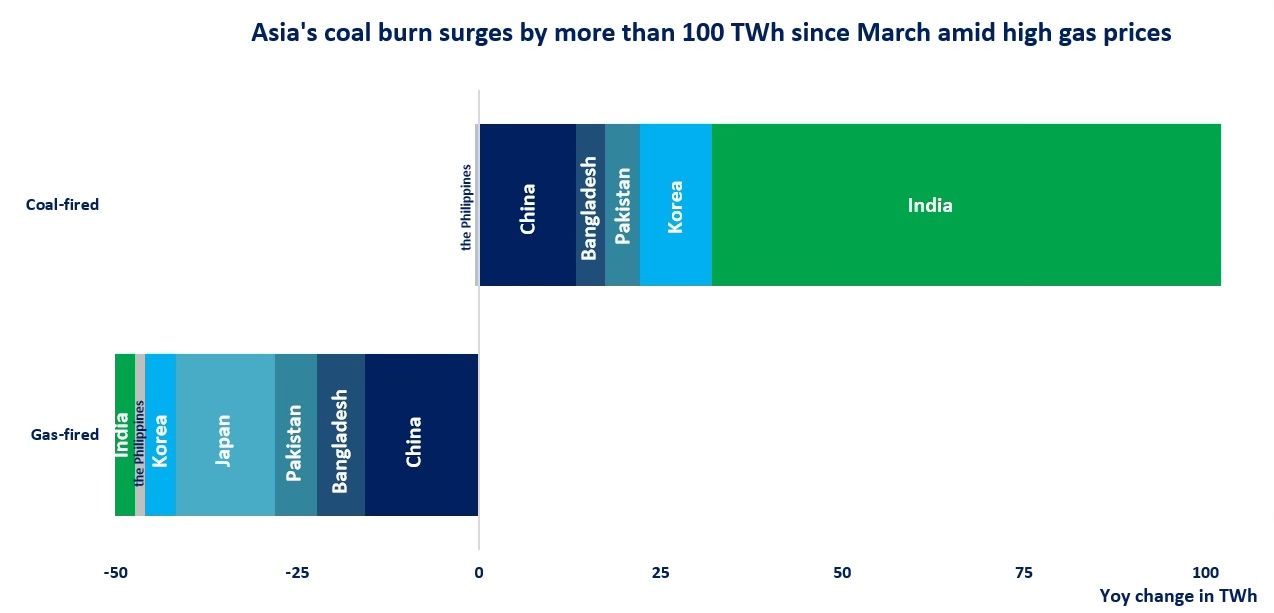
Prices for Australian high-CV material retreated from last week’s highs, repeating the movement of European indices, as well as amid the reversal/stabilization of prices in the Chinese market. At the same time, factors that had provided potential support to quotations — uncertainty over Indonesia’s thermal coal export policy and high LNG prices in Asia — remain in place.
Australian HCC metallurgical coal index fell to 278 USD/t.
Chinese buyers of coking material have taken a wait-and-see stance and begun refusing expensive cargoes, while a number of sellers have started lowering prices. According to experts, this is more a correction of overheated prices than the beginning of a broad downturn.
However, an increasing number of Chinese consumers are leaning toward bearish sentiment, and the steel industry is beginning to cut production due to low profitability.
Growing caution in China has begun to pressure the PCI coal market, pushing Low Vol PCI material down to 199 USD/t.
Source: CCA