Global coal prices were mixed across key regions: prices in Europe remained stable; coal in China saw modest growth; Australian thermal coal quotations posted significant gains, while metallurgical coal prices held flat.
European thermal coal indices traded within a 95-97 USD/t range, closing Friday at 96 USD/t, virtually unchanged from the previous week. Pressure continued from factors such as sufficient supply and stable coal stocks, coupled with falling gas prices, above-average temperatures, and increased renewable generation.
Gas quotations on the TTF hub dropped to 369.98 USD/1,000 m³ (-2.82 USD/1,000 m³ w-o-w). EU gas storage inventories contracted by 1 p.p. to 82% on the back of high gas withdrawals. Coal stocks at ARA terminals in Europe remained at 3.55 mio t (-0.02 mio t w-o-w).
South African High-CV 6,000 continued firming to nearly 86 USD/t for the 4th consecutive week, supported by improved demand from Asian countries and declining port inventories. An increase in inquiries from Pakistan was also noted. Stocks at the RBCT terminal decreased to 3.75 mio t (-0.19 mio t w-o-w).
Rail operator Transnet resumed services on the third rail line on November 12, following a wagon derailment, that occurred on November 07. The first and second lines were reopened on November 09.
South African company Liberty Coal entered a new phase of rehabilitating the Optimum coal mine, appointing a subsidiary of the Liberty Mine Services (LMS) group as the main contractor. This step is aimed at revitalizing, stabilizing, and restoring the problematic coal asset in Mpumalanga.
The Optimum mine produces between 0.3 mio t and 0.5 mio t per month, or approximately 5.5 mio t annually. Over the past year, 4.6 mio t were shipped to RBCT. At its peak capacity, Optimum produced over 12 mio t of coal per year. The calorific value of the mined coal ranges between 5,500-5,700 kcal/kg NAR.
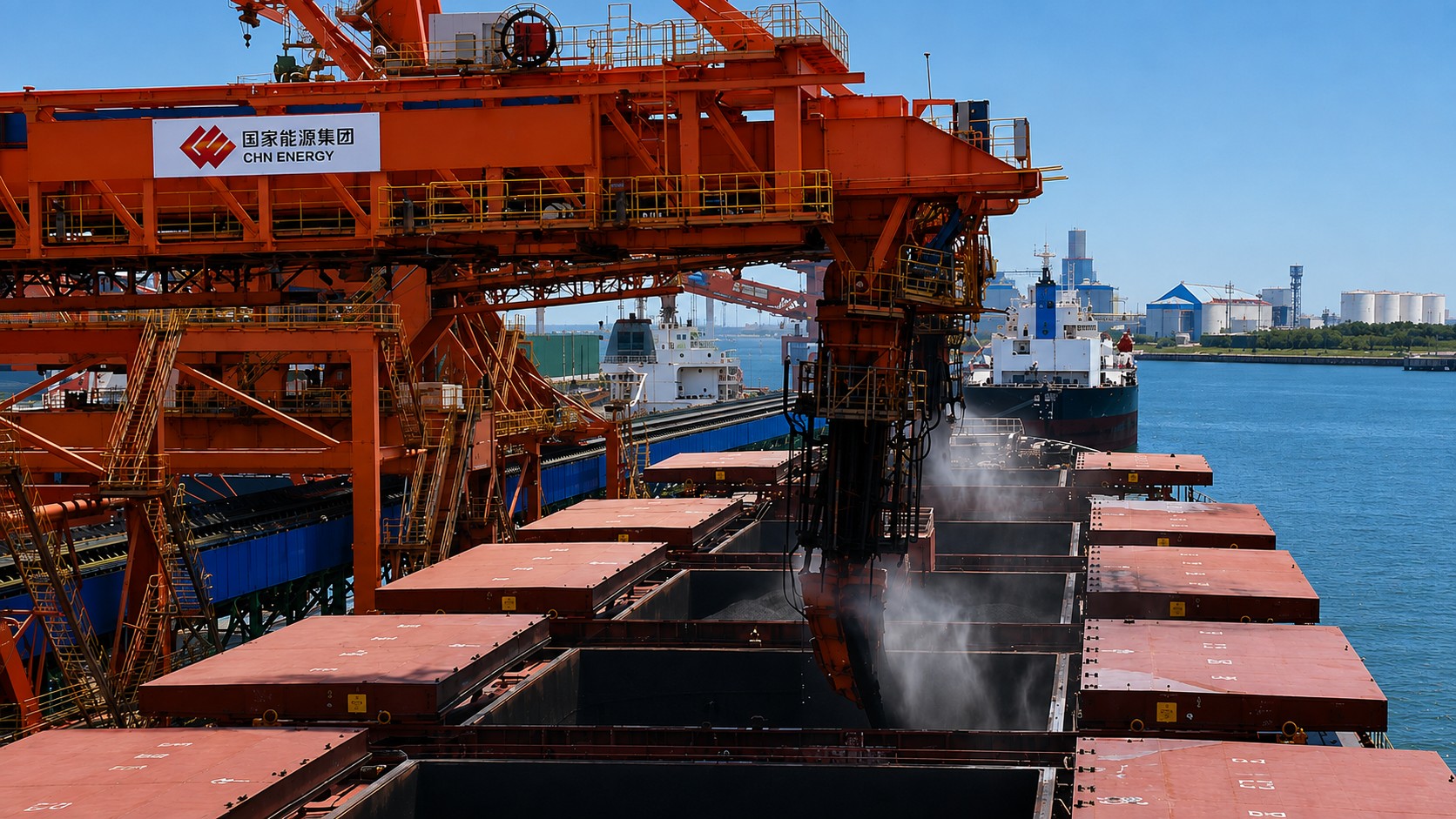
In China, spot prices for 5,500 NAR coal at the port of Qinhuangdao rose slightly above 117 USD/t. The Chinese market continues its upward trend, although the pace of growth slowed last week amid increasing stockpiles. The sustained increase is driven by a combination of factors: rising consumption at TPPs, declining production, tightened safety inspections at mines, and a sharp cold snap (China’s National Meteorological Center issued a blue cold wave alert).
Production growth in the country has slowed due to government measures against exceeding production quotas introduced since July. Overall October production declined by 2.3% y-o-y. Ongoing safety inspections, along with the exhaustion of mining quotas, are expected to reduce coal availability. Furthermore, peak power load in Southern China this winter is forecasted to grow by 9% compared to last year, reaching 239 GW.
Inventories at the 9 largest ports increased to 25.48 mio t (+1.29 mio t w-o-w). Coal stocks at the 6 largest coastal TPPs totaled 14.05 mio t (+0.10 mio t w-o-w), while consumption rose to 804 kt/day (+4 kt/day w-o-w).
Indonesian 5,900 GAR climbed above 82 USD/t, while the price of 4,200 GAR firmed to 48.5 USD/t.
Indonesian material continued to recover owing to growing demand and persistently constrained supply caused by adverse weather conditions. Indonesia’s Ministry of Energy and Mineral Resources kept the HBA reference price for thermal coal largely unchanged for most grades in H2 of November.
The country’s authorities voiced the idea of lowering the 2026 production target to stabilize export prices. Additionally, the introduction of a coal export duty (specific timing and rate not detailed) is being considered to boost state revenues.
However, coal companies warn that such a measure would reduce their competitiveness.
Australian High-CV 6,000 surged to 114 USD/t. The Australian high-calorific thermal coal market returned to growth, caused by a correction the previous week. The reversal in quotations was driven by a combination of steady demand (procurement ahead of winter in Asia, including China, Taiwan, and South Korea) and limited supply (from both Australia itself and Indonesia).
Australia’s HCC metallurgical coal index remained flat at 195 USD/t, finding some support and balance. Demand in India faded after small enterprises replenished their stocks several days ago; however, demand could increase if the country’s authorities approve the imposition of an anti-dumping duty on coke.
Chinese steel companies state that despite seaborne coking coal prices being more competitive, they will refrain from some purchases. Furthermore, increased supplies from Mongolia are also anticipated in China.
Source: CCA Analysis
Further reading on last’s coal prices:
Global coal prices show mixed momentum across Atlantic and Pacific markets