Indonesian coal demand has surged to a record monthly high even as the government attempts to curb domestic coal production. New data suggests growing demand from smelters, power generation and downstream processing industries is tightening the domestic market and reshaping coal flows across the country
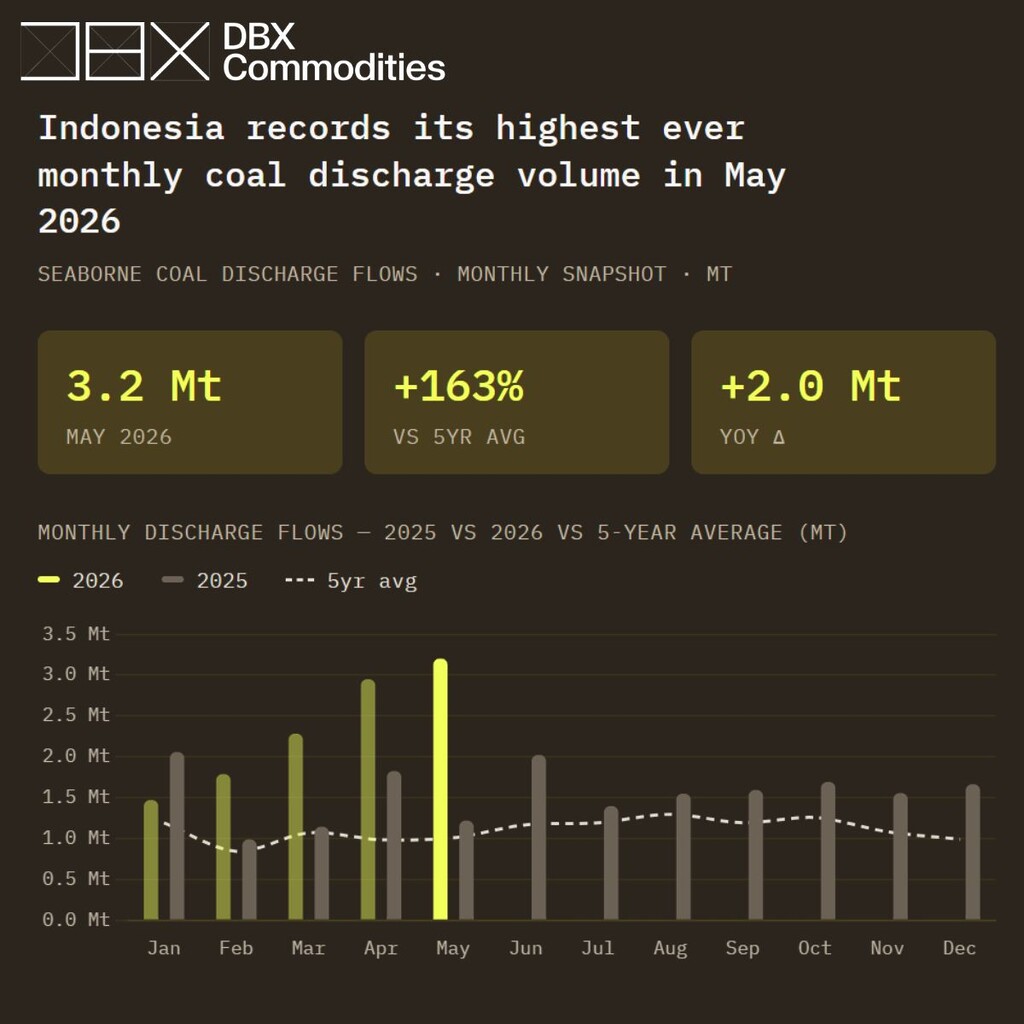
Indonesia is recording its highest-ever monthly coal discharge volume, highlighting the growing strength of domestic coal demand despite government efforts to reduce production.
According to DBX Commodities, coal discharge volumes reached 3,203 kT in May 2026, representing an all-time high and standing 163% above the five-year seasonal average.
The trend comes as Jakarta seeks to reduce coal output to approximately 600 million tonnes in 2026, around 24% below last year’s production levels, in an effort to support coal prices following a period of oversupply.
However, domestic demand is expanding rapidly. Coal consumers that are unable to secure sufficient local supply are increasingly competing for available volumes, while growing industrial activity continues to lift consumption.
A key driver is Indonesia’s downstream minerals strategy. The country’s 2020 nickel ore export ban triggered significant investment in domestic smelting capacity, creating a growing appetite for coal. Nickel and metals processing operations now account for an estimated 31% of domestic coal consumption, with additional demand expected from ongoing industrial expansion and power sector growth.
The result is a striking contradiction. While authorities are attempting to restrict supply to support export prices, rising domestic demand is simultaneously pushing coal volumes through the local market at record levels.
The latest data highlights the increasing importance of Indonesia’s industrial sector in shaping coal demand trends and suggests that domestic consumption could become an even more significant factor in the country’s coal market over the coming years.
Source: DBX Commodities LinkedIn post