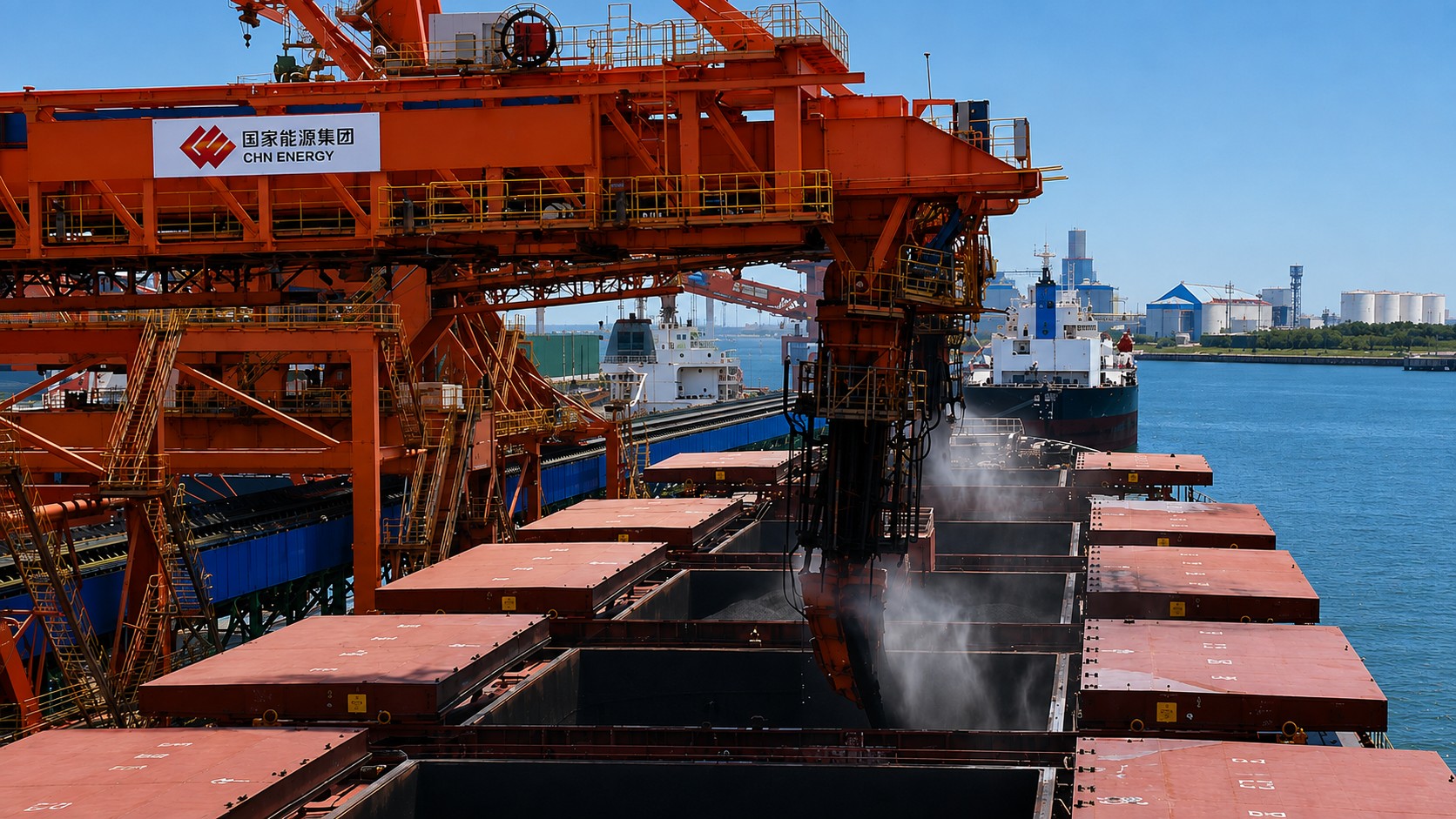



Russian coal exports to China declined sharply in Q1 2026 as high railway tariffs, logistics challenges, sanctions and ruble appreciation continued to pressure suppliers.
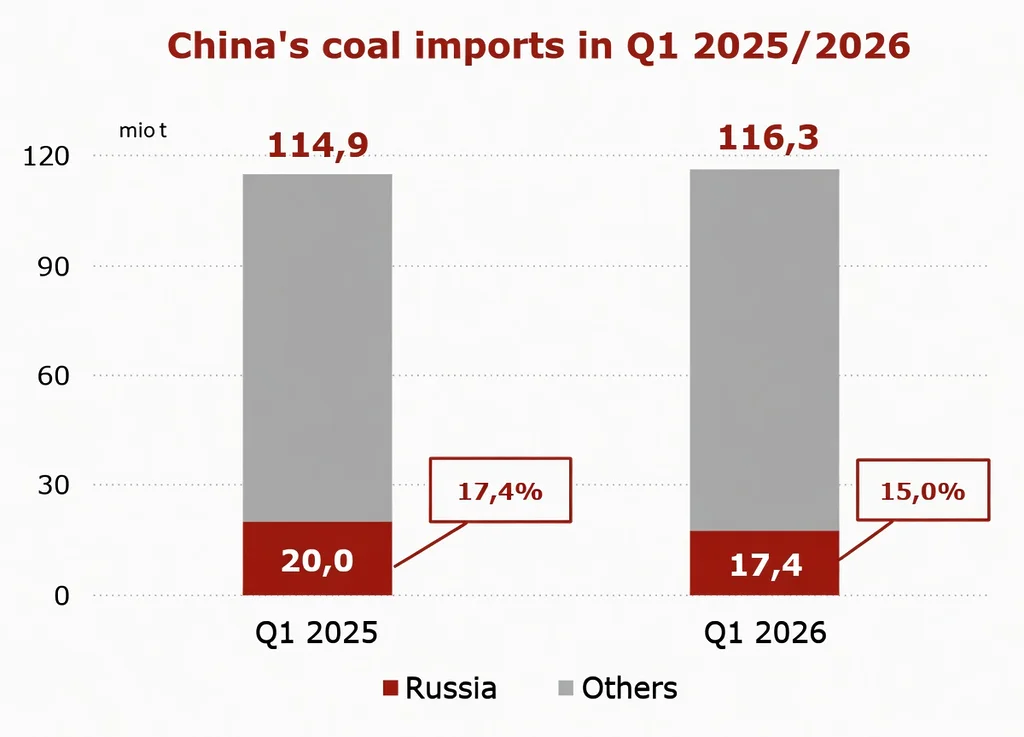
In Q1 2026, Russian coal supplies to China dropped to 17.4 mio t (-2.6 mio t or -13.0% vs. Q1 2025), according to the General Administration of Customs of China (GACC).
The decrease in Russian coal supplies resulted from high railway tariffs, logistical issues, international sanctions and ruble appreciation. Given depressed global prices, these factors are forcing most producers to export coal at zero or negative margins, which will likely lead to further production and supply cuts in the near term.
In Q1 2026, China’s total coal imports climbed to 116.3 mio t (+1.4 mio t or +1.2% vs. Q1 2025).
China’s total coal imports in 2025 dipped to 490.5 mio t (-52.3 mio t or -9.6% y-o-y).
Indonesia, China’s largest coal supplier, reduced its exports to 50.3 mio t in Q1 2026 (-2.3 mio t or -4.4%, compared to Q1 2025). In the first three months of 2026, Mongolia continued to steadily increase its coal shipments to 28.0 mio t (+10.5 mio t or +60.0% vs. Q1 2025), securing its second place among coal exporters to China.
It is followed by Russia, which supplied 17.4 mio t (-2.6 mio t or -13.0% vs. Q1 2025), although last year Russia was the second-largest supplier after Indonesia. Australia slipped to the fourth place, exporting 16.8 mio t (+0.4 mio t or +2.4% vs. Q1 2025).
Market share shifts among major suppliers (Q1 2026 vs. Q1 2025):
Despite strong demand, Russian coal exports to China continue to decline due to systemic issues and crisis in the coal industry, potentially leading to Russia’s shrinking market share and growing competitive pressure from other suppliers.
Source: CCA