Coal market rebounds: European prices recover from 6-month lows; Chinese prices firm up; Australian thermal coal stabilizes, metallurgical coal corrects upwards.
The European coal market rebounded last week, after a significant decline the previous week and a drawdown in inventories. Although, fundamental demand remains weak. Support may have come from firmer EU carbon allowance (EUA) prices.
European thermal coal indices strengthened almost reaching 94 USD/t. Сoal stocks at ARA terminals decreased to 3.29 mio t (-0.17 mio t compared to September 10, 2025). The inventory drawdown is attributed to delayed arrivals of Colombian material at ARA ports and utilities taking advantage of sufficient water levels on the Rhine for coal barge movements.
The South African 6,000 index fell to 83 USD/t. Activity in the South African thermal coal market remained subdued as Indian consumers await the upcoming change in the tax structure scheduled for next week.
Falling sponge iron prices last week prompted Indian producers to seek cost reductions for raw materials. Some attempted to negotiate compensation for the fixed levy (4.54 USD per t), which is effective until September 22 and is not eligible for tax credits.
Reportedly, about 3.0 mio t of unsold coal, with the fixed levy already paid, remains at east coast ports like Paradip. Traders holding this material at east coast ports are reluctant to make concessions. Offer prices have remained virtually unchanged in the range of 92.32–93.46 USD/t (excluding the fixed levy but including customs duties and truck/rail loading charges).
Coal inventories at Indian power plants stood at 49.7 mio t as of September 15, 2025, nearly 26% higher than the previous year. This stock build was driven by the accumulation of domestically produced coal (reaching 45.9 mio t, 33% higher than in 2024).
A weakening monsoon, rising temperatures, and lower renewable energy output led to increased electricity generation from coal-fired power plants last week. From September 10 to 15, coal-based generation rose by 17%.
In China, spot prices for 5,500 NAR coal at the port of Qinhuangdao firmed to 97 USD/t. Prices at mining regions increased by 0.70-1.41 USD/t, supported by demand from the chemical and metallurgical sectors, as well as winter stockpiling in several northern regions.
Sources within the mining industry see potential for sustained growth in the short term, as increased government control over overproduction and environmental issues will force many producers to cut output. Last week, a central government environmental inspection team demanded authorities in Shanxi province strengthen supervision of coal production. In the first seven months of 2025, Shanxi produced 756.4 mio t of coal, 7% more than the same period in 2024.
Authorities in Inner Mongolia published a list of companies that exceeded their approved production volumes in 2024 and the first half of 2025. Some were ordered to suspend operations immediately.
A survey of 493 major power generators showed that daily coal consumption reached 4.05 mio t on September 12, down 0.12 mio t from the previous week. Coal stocks fell by 0.28 mio t to 96.08 mio t, sufficient for 24 days of operation.
The Indonesian 5,900 GAR index consolidated above 76 USD/t FOB, while the price for low-CV 4,200 kcal/kg GAR material exceeded 42 USD/t FOB.
Indonesian material found support from potential output restrictions in China and ongoing heavy rains hampering operations at Indonesian mines.
Australian NEWC index for 6,000 kcal/kg material stabilized at 101-102 USD/t, having dipped below 100 USD/t for the first time since May earlier in the week. However, the return of some physical buyers triggered short-covering and pushed up paper contracts. Mid-CV material traded in the range of 69-70 USD/t.
Port congestion at Newcastle began to ease: on September 15, approximately 80 vessels were queued for loading, compared to 105 vessels on September 8.
The Australian HCC metallurgical coal index firmed to 189 USD/t following news of the idling of one BHP mines.
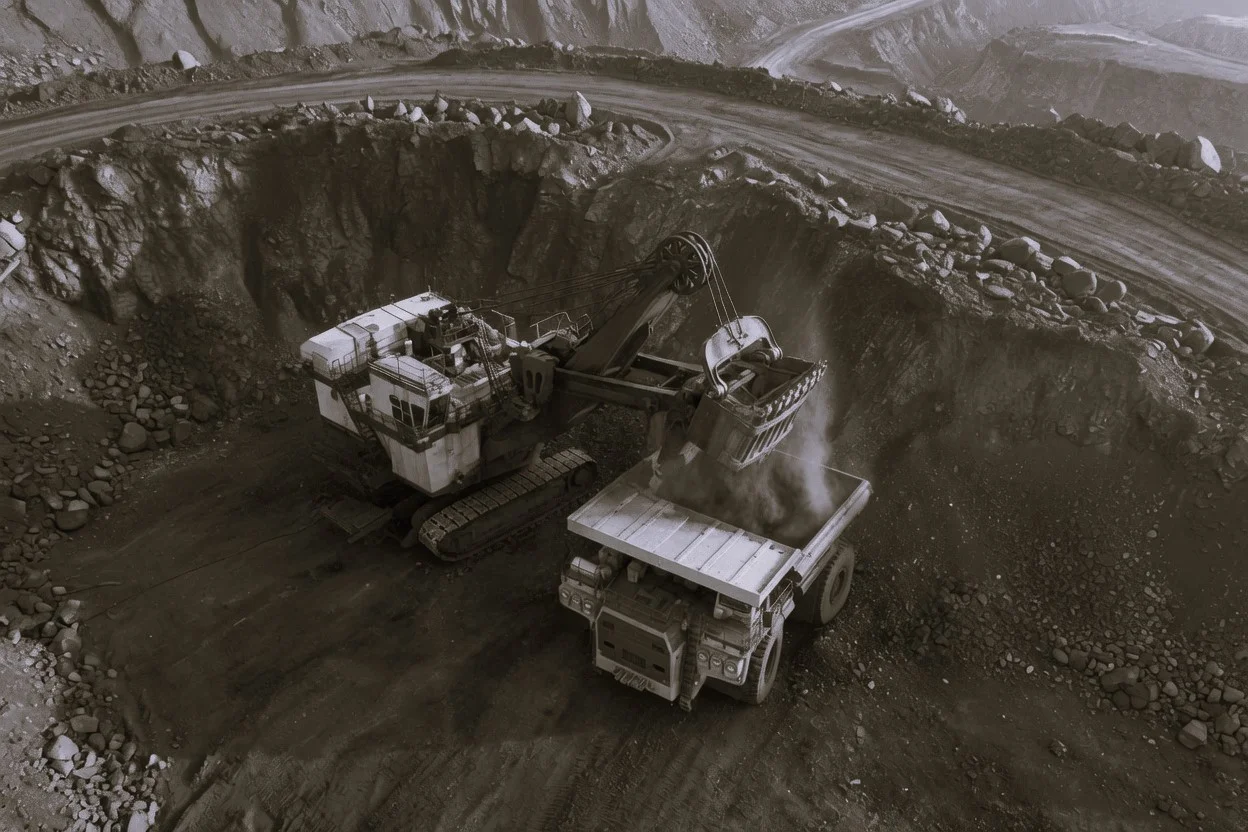
BHP will mothball Saraji South mine, owned by the BHP Mitsubishi Alliance (BMA) joint venture with Japan’s Mitsubishi, and put under maintenance from November 2025. The Saraji South mine, with a capacity of 1 mtpa, produces Saraji brand premium low-vol HCC.
The decision was driven by low mining profitability due to high royalty rates in Queensland. Experts note that Saraji South was one of the least cost-effective asset with low logistics efficiency, as run-of-mine coal required significant truck haulage.
According to the Queensland government, Japan, South Korea, and Vietnam were the three largest importers of Saraji coal in the financial year ending June 2025, accounting for over 50% of the mine’s output.
It remains unclear how the suspension will impact BMA’s total production for 2025, which is forecast at 36-40 mio t.
Overall, demand for metallurgical coal from China and India remains subdued.
Source: CCA Analysis