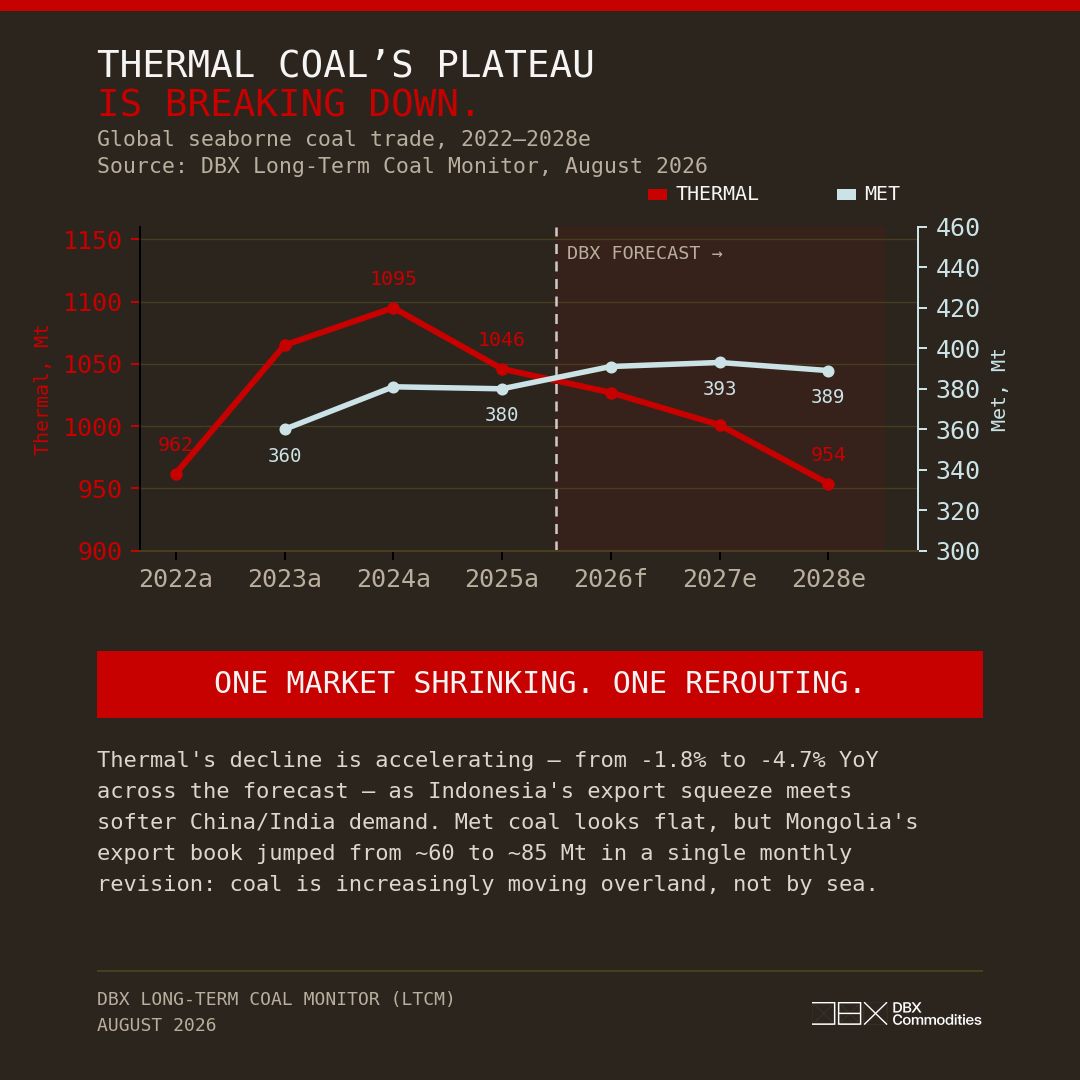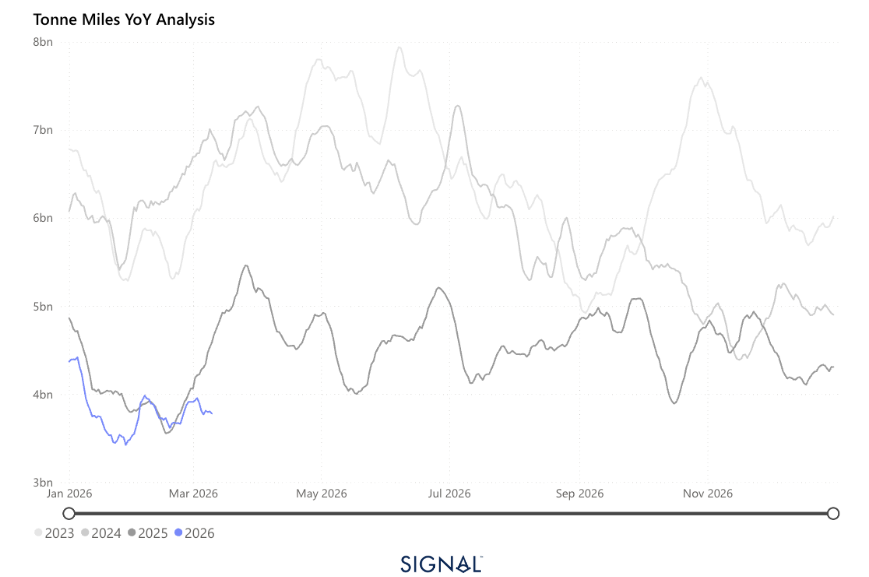
Seaborne coal demand in 2026 is being shaped by weaker Chinese imports, lower Indonesian exports, and stronger demand from India.
Global seaborne coal flows fell by more than 1% in February, with China importing about 25 million tonnes, down 10% year on year. At the same time, Indonesia’s coal exports dropped by almost 13%, tightening supply in the market.
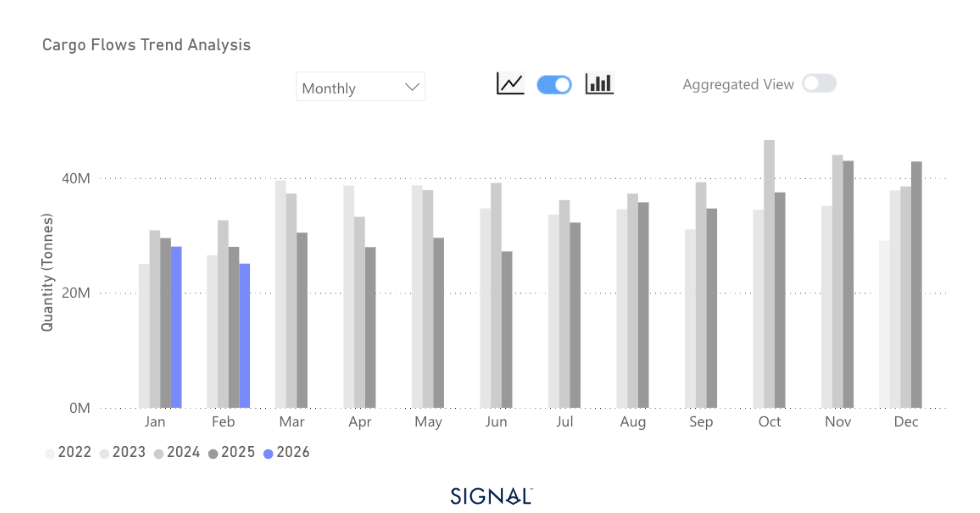
Even so, seaborne coal demand could remain supported in Asia. India increased seaborne coal flows by nearly 9% to 19 million tonnes in February, helped by stronger industrial activity and rising steel production.
Higher summer electricity demand from April to June is also expected to keep imports firm in the coming months.
Another important factor is the tighter oil and LNG market around the Arabian Gulf. Disruptions near the Strait of Hormuz have raised fuel costs, making coal a more competitive option for price-sensitive Asian buyers.
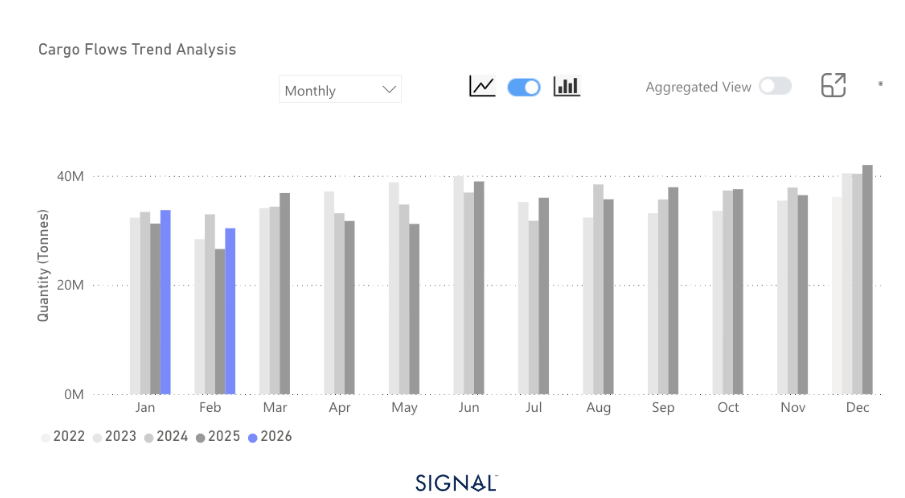
This could support additional coal consumption, especially in markets where gas use becomes more expensive during peak demand periods.
Europe remains more limited structurally, while Australia and South Africa are well placed to supply extra volumes if buying interest rises further.
Source: The Signal Group