Global coal prices moved higher this week as European, Chinese, Australian, and metallurgical coal indices strengthened amid energy market volatility and firmer demand.
The coal market saw an upturn: indices in Europe bounced higher; in China, coal became more expensive; in Australia, thermal and metallurgical quotations strengthened.
European thermal coal indices bounced back above 112 USD/t after a decline the previous week. Quotations found support from volatility in energy markets amid conflicting statements from Trump that the military operation against Iran is nearing completion (will last another two to three weeks), but the US will deliver devastating strikes on Iran.
This week, German coal-fired power plants turned profitable after a sharp rise in electricity prices from 86.57 EUR/MWh to 123.62 EUR/MWh, helping coal generation swing from a loss (-22.12 EUR/MWh) into profit (14.53 EUR/MWh). Gas-fired plants could not compete with coal: their margins remained negative (-8.82 EUR/MWh). Gas quotations on the TTF hub corrected lower to 595.86 USD/1,000 m3 (-63.88 USD/1,000 m3 or -9.7% w-o-w).
Italy is revising its recent plan to phase out thermal coal from its power system, abandoning the hard closure of coal plants in 2026 and instead pushing the coal phase-out deadline to 2038, as the Middle East conflict reshapes priorities in achieving net-zero goals.
South African High-CV 6,000 edged higher above 109 USD/t, following the European market. Import activity in India picked up from late last week as price offers softened, and at least one deal for South African coal was concluded.
South Africa’s Supreme Court of Appeal rejected Eskom’s claim seeking to ban access to its coal and diesel supply contracts, ruling that the power utility failed to justify why this information should remain secret.
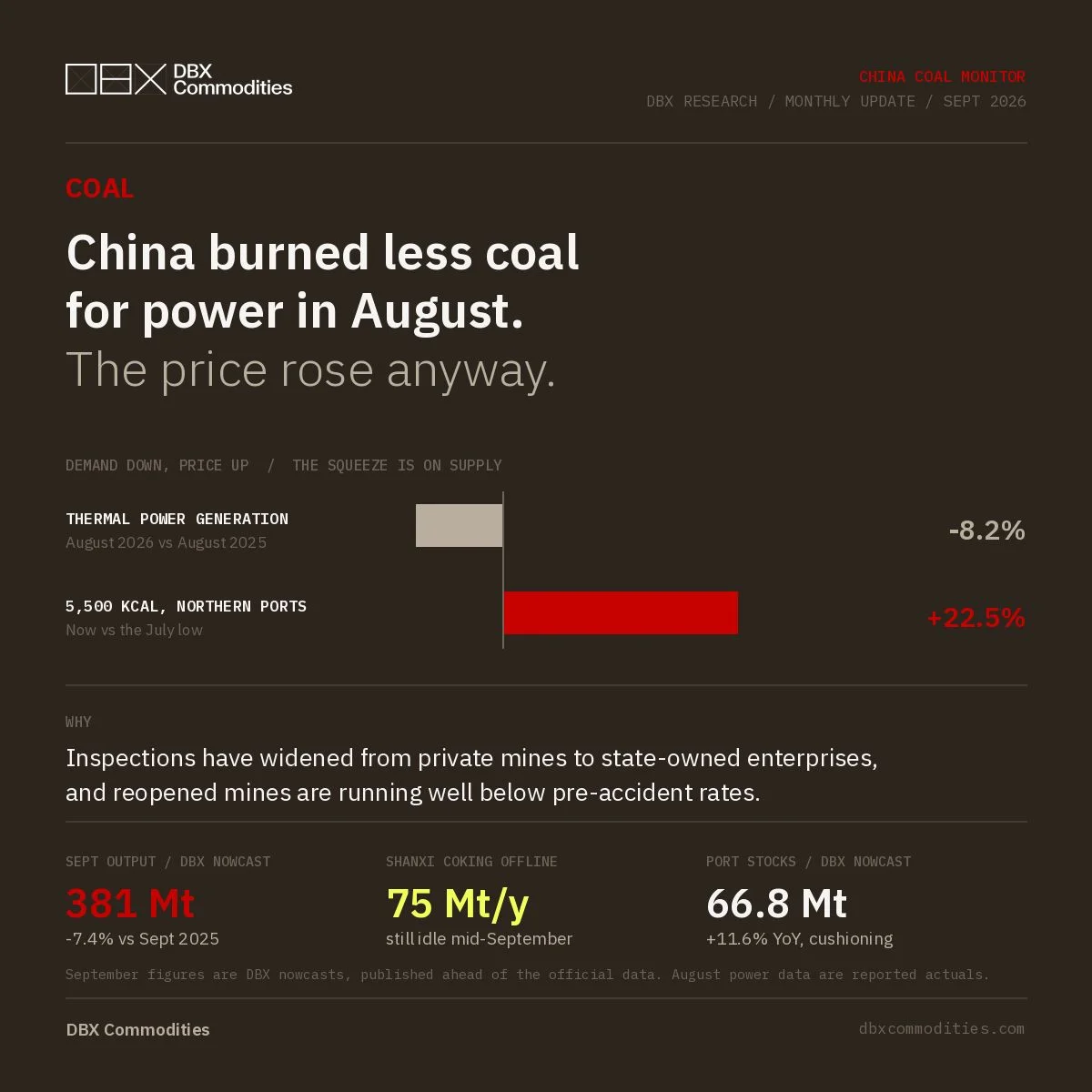
In China, spot prices for 5,500 NAR coal at the port of Qinhuangdao rose above 110 USD/t amid weak hydropower generation. Industrial demand in the country is expected to remain high: capacity utilization at coal processing and cement sector enterprises remains elevated, which could offset part of the demand shortfall that emerged after the heating season ended.
Stocks at 9 major ports increased to 28.74 mio t (+0.27 mio t w-o-w), while inventories at 6 major coastal thermal power plants remained nearly unchanged at 12.70 mio t (-0.04 mio t w-o-w).
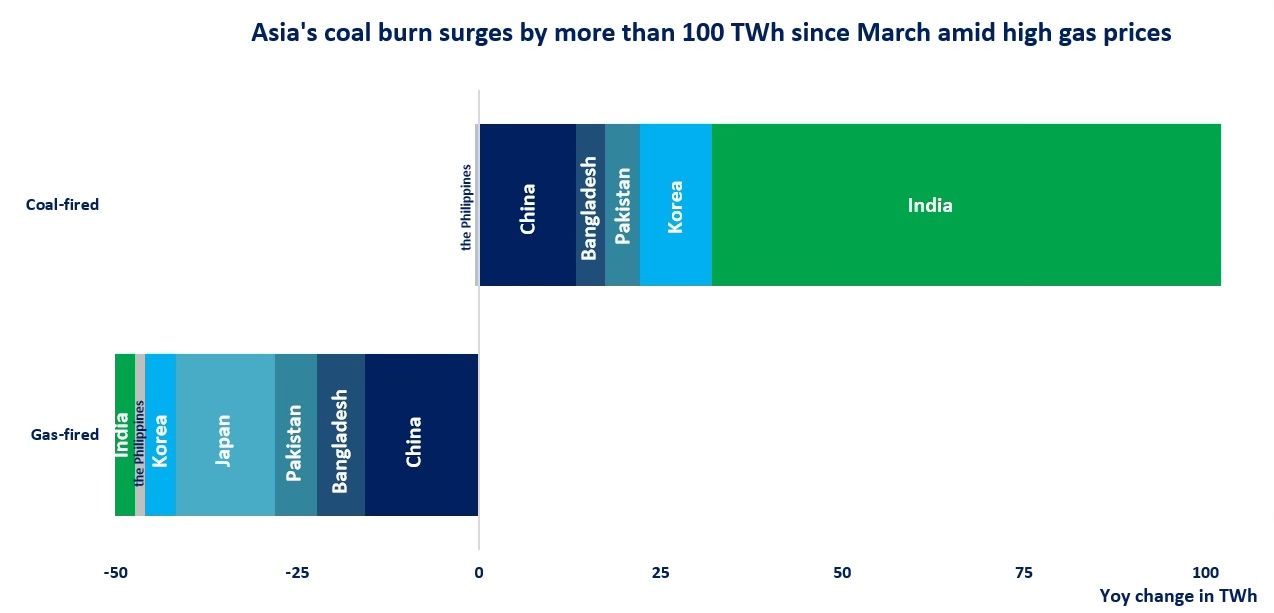
Indonesian 5,900 GAR firmed slightly above 92 USD/t, while 4,200 GAR remained nearly unchanged at around 60 USD/t. Support comes from rising demand from India, China, Bangladesh, and Vietnam, as well as lower coal exports since the start of the year tied to uncertainty over Indonesian production volumes.
However, supply improved somewhat over the past week: Indonesian authorities approved production quotas of 580 mio t, close to the planned 600 mio t, and potential revisions could lift final volumes above 700 mio t. This allowed suppliers to offer more coal cargoes and eased concerns over previously expected further supply disruptions.
Australian High-CV 6,000 rose above 142 USD/t, hitting a 17-month high as the ongoing military conflict with Iran drives up the cost of LNG and other fuels. Lower freight rates also provided support to quotations.
Moreover, supply of Australian material could be limited due to a dispatchers’ strike disrupting operations on a key section of the West Moreton rail line in Queensland, used to transport thermal coal to the Port of Brisbane.
Operator Queensland Rail reported that coal trains on the section between Ipswich and Rosewood were halted on April 1, and members of the Electrical Trades Union joined the strikes on April 2, creating significant freight disruptions. These events will compound planned track closures from April 3 to 26 for major project work. The operator has called on the dispatchers’ union to call off the action and return to wage negotiations.
Australia’s HCC metallurgical coal index stabilized above 236 USD/t, supported by increased demand. The recovery in Chinese steel production volumes, combined with sharp price gains in physical and futures markets and declining port inventories, has fueled buyer interest in the imported metallurgical coal market.
Anglo American’s coal division, which includes four metallurgical coal mines in Queensland, has attracted new buyers, including Stanmore Resources and Indonesia’s BUMA International Group. Anglo American is thus reviving the sale of its asset after Peabody Energy walked away from a potential acquisition deal last August.
Source: CCA