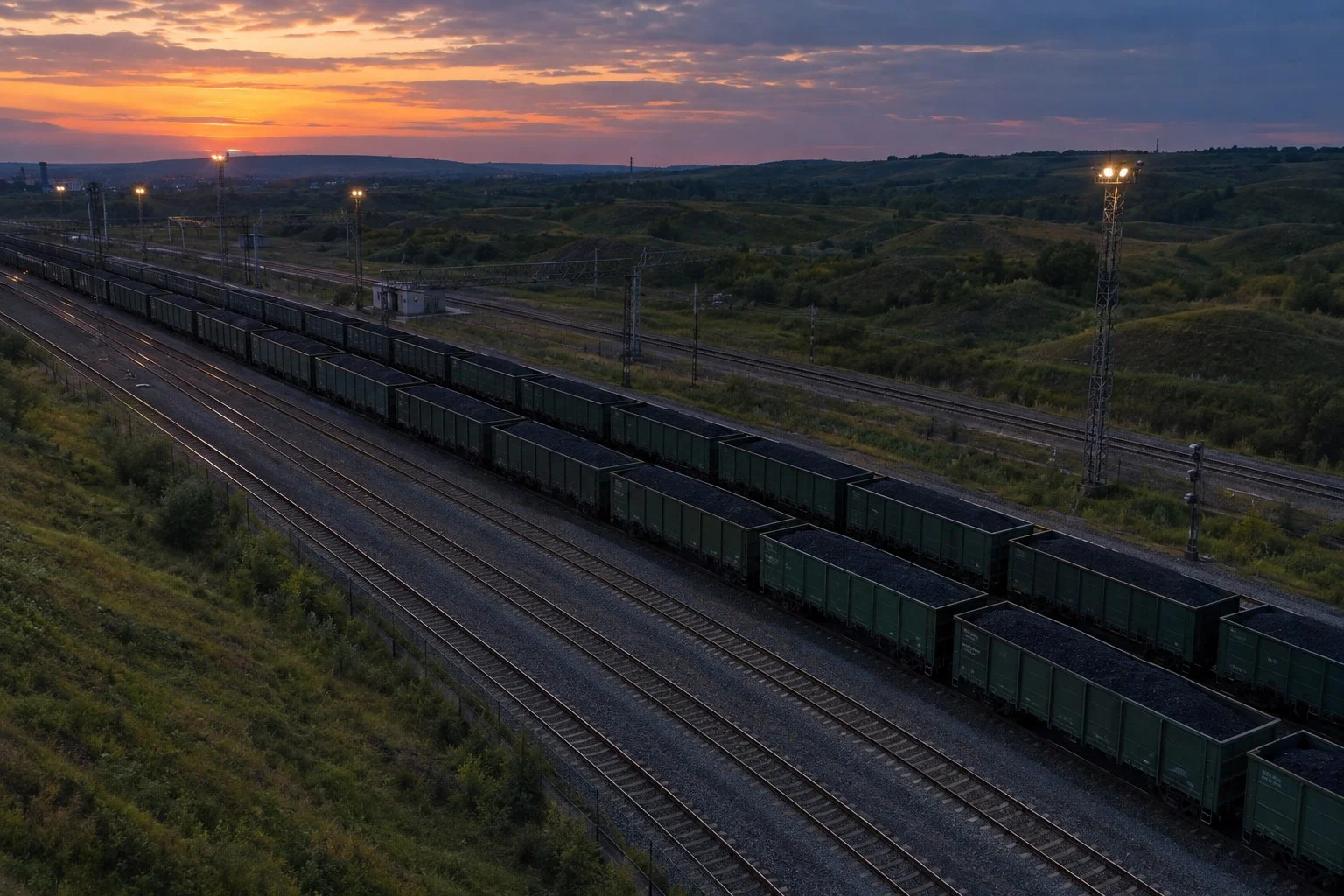
Net losses of Russian coal companies in January-March 2026, according to preliminary data, amounted to 1.1 bln USD, up 0.2 bln USD or 20% y-o-y. The share of unprofitable companies reached 63%, compared to 61% a year earlier. 62 enterprises remain in the red zone, of which 20 have already stopped mining, while the rest are on the verge of halting operations.
Companies’ performance is deteriorating due to several negative factors, including transportation costs, as Russian Railways (RZD) raises tariffs: in 2025, the increase spiked 13.8% (despite official inflation of 5.6%), and in March 2026, a 1% surcharge was introduced, in January 2027 the tariff will be raised by 8%, with further indexation expected.
In addition, the ruble was strengthening again, and bank interest rates remained high, placing significant pressure on coal producers and exporters, while also increasing the debt burden. Debt burden by the end of 2025 reached 18 bln USD (+5.1 bln USD or 40% y-o-y).
Despite this, the government does not plan to extend the deferment on mineral extraction tax (MET) and insurance premium payments beyond April 2026. In this regard, the Ministry of Energy forecasts that losses of Russian coal enterprises will rise to 7 bln USD in 2026, which is 27% higher than in 2025.
Thus, in 2026, the negative trend in the Russian coal industry is intensifying amid rising production costs and ruble appreciation. Additional factors continuing to adversely affect coal companies’ financial results include high rail tariffs and limited rail infrastructure capacity on the Eastern range. Due to Western sanctions, the list of countries available for Russian coal exports remains limited.
Source: CCA