China coal power rose for a sixth consecutive month in June as weaker wind generation and continued renewable curtailment created additional space for coal-fired electricity. The latest monthly snapshot highlights how weather conditions, grid constraints and expanding thermal capacity continue to influence the world’s largest power market despite the rapid deployment of renewable energy.
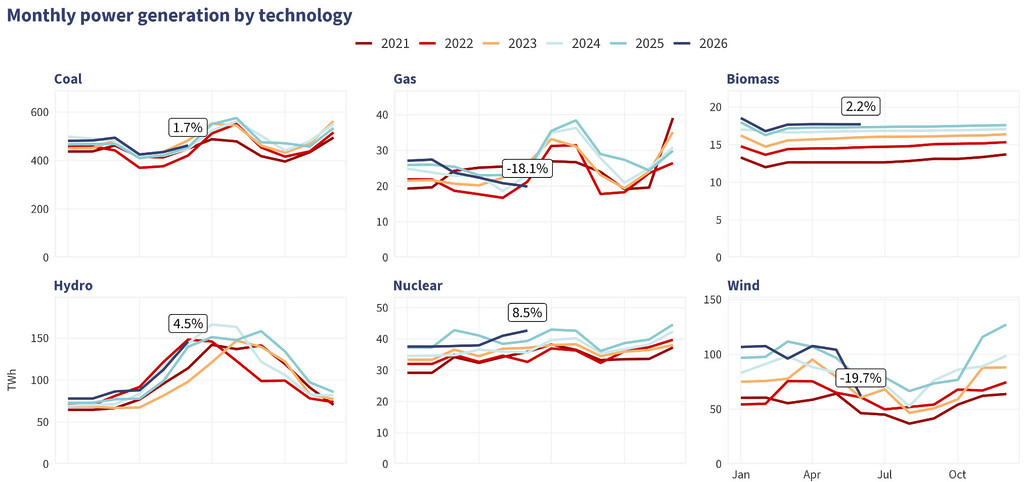
China’s coal power generation increased by 1.7% year-on-year during June. By contrast, wind generation fell by almost 20% following an unusually weak nationwide wind event, while gas-fired generation dropped sharply as disruptions to natural gas supplies continued.
Solar generation continued to expand, while hydropower and nuclear also recorded year-on-year gains, but these were not enough to offset weaker wind output or reduce reliance on coal-fired generation.
The analysis also points to the continuing expansion of China’s thermal power fleet. During the first five months of 2026, more than 32 GW of new thermal power capacity was commissioned, an increase of 84% compared with the same period last year. At the same time, additions of solar and wind capacity slowed sharply following exceptionally strong installations ahead of changes to China’s renewable pricing framework.
Developments in the coal market reflected tighter domestic supply conditions. Coal production declined during June, while imports increased to help balance the market. Elsewhere, industrial activity remained mixed, with steel output stabilising but cement production continued to weaken, reflecting broader challenges in China’s construction sector.
For thermal coal markets, the June figures reinforce an important point: China coal power remains highly responsive to weather conditions and power system requirements. Despite record investment in renewable energy, coal continues to provide essential system flexibility when wind output underperforms.
As the world’s largest consumer of thermal coal, short-term changes in China’s power generation mix continue to influence both domestic demand and international coal markets.
Source: Centre for Research on Energy and Clean Air (CREA), China Energy and Emissions Trends – June 2026 Snapshot.