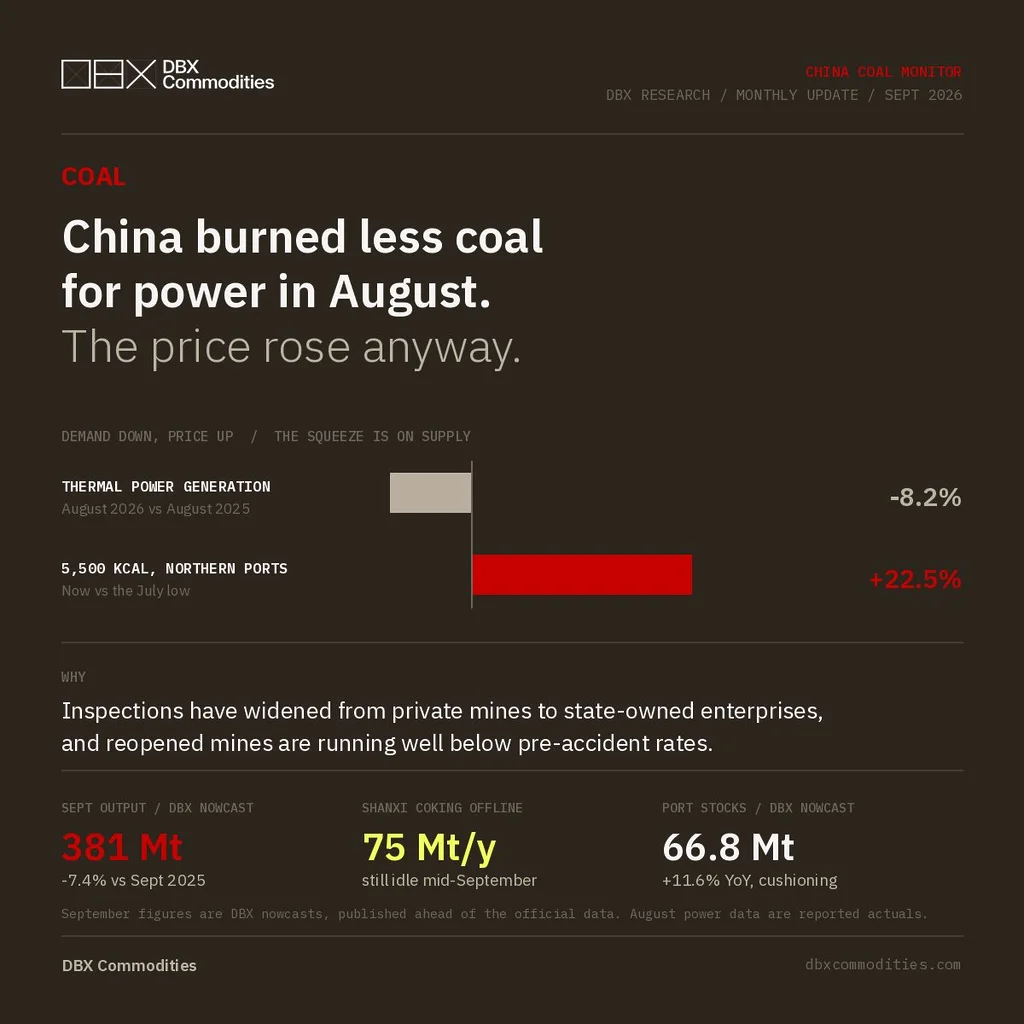
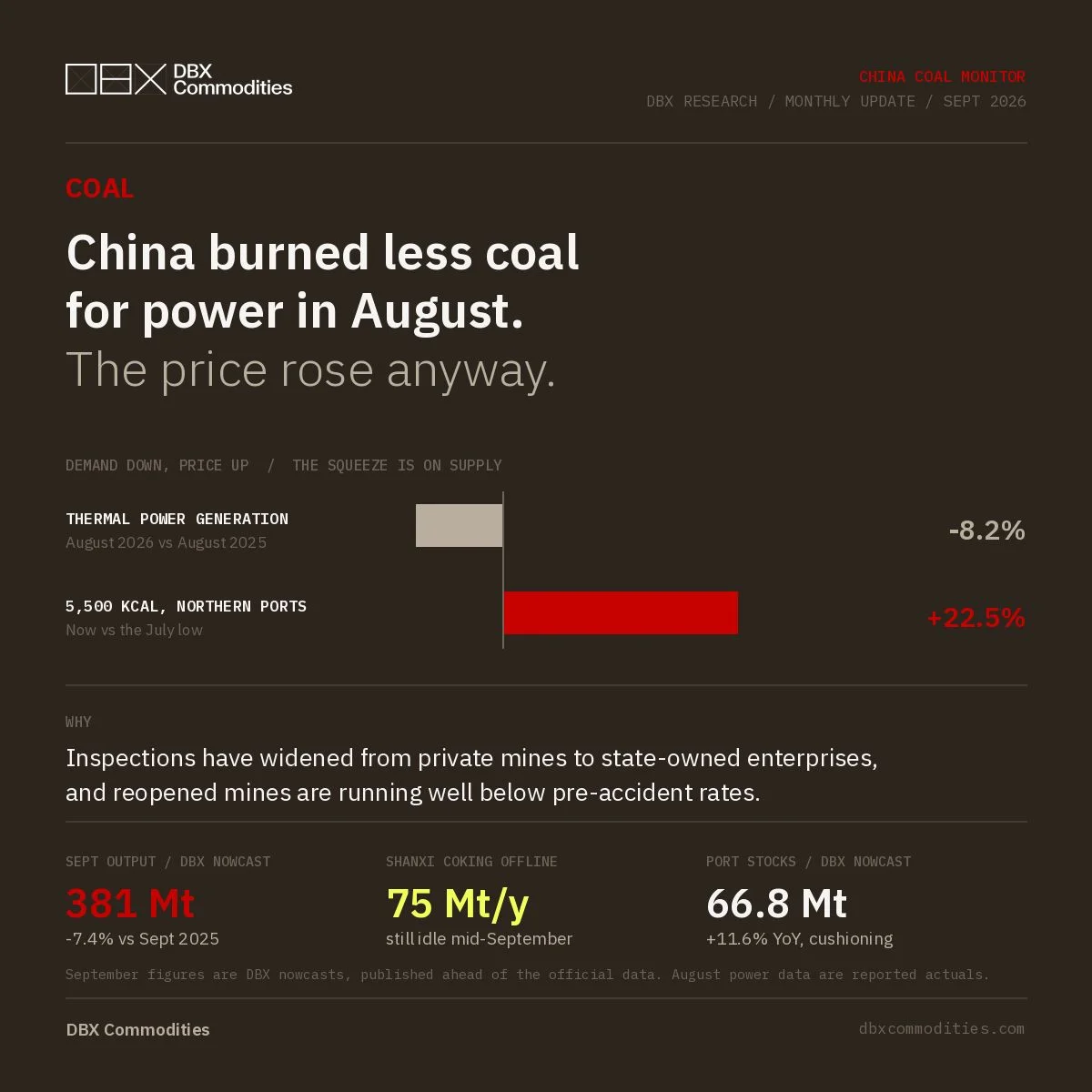
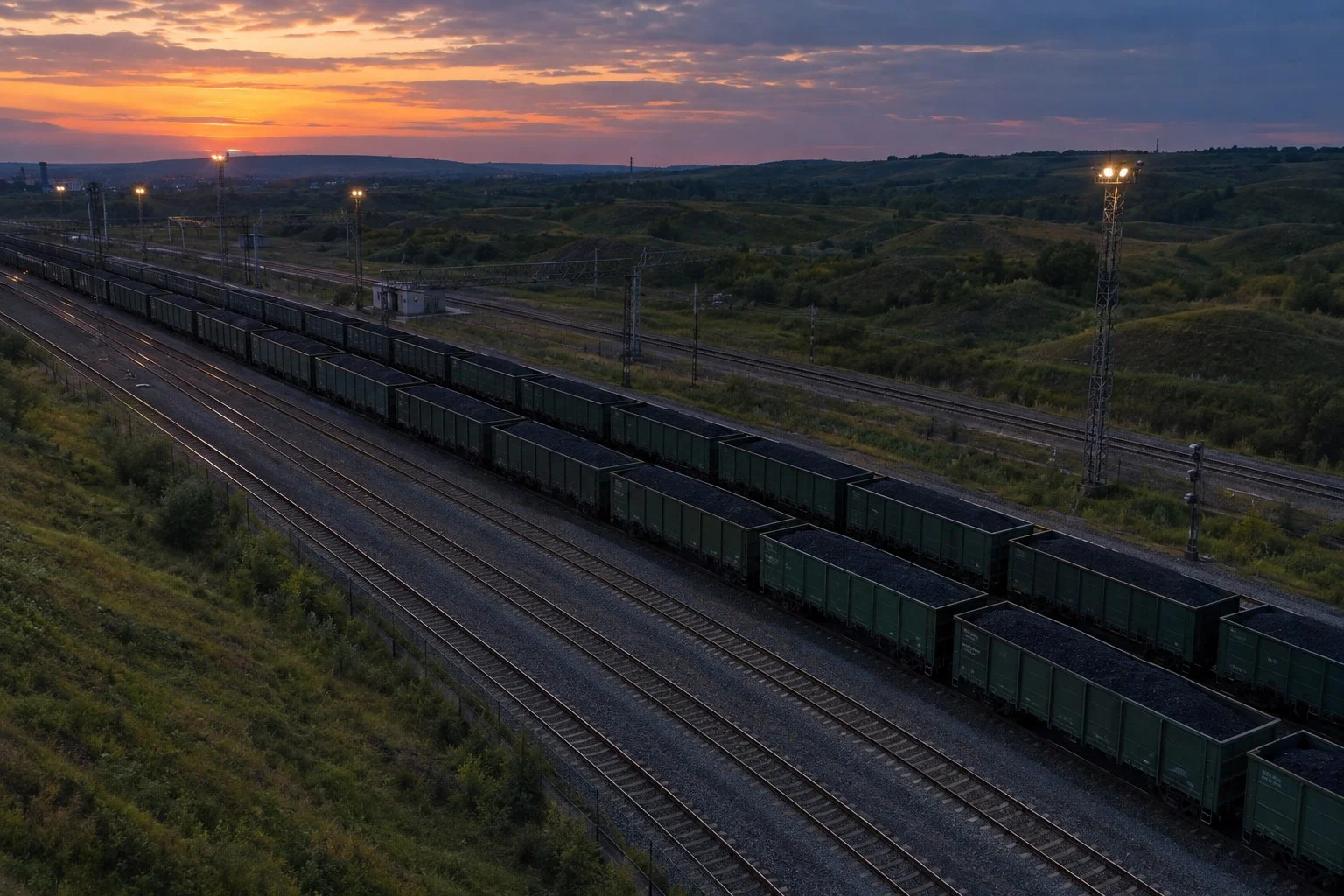
China coal prices are rising despite weaker power-sector coal use, as supply constraints persist beneath a substantial inventory cushion. China burned 8.2% less coal for power in August than a year ago. The price went up anyway.
Thermal generation fell to ~576.3 TWh. The displacement is structural, not weather: wind +24.7% year on year, solar +14.8%, nuclear +10.5%. Coal is still the marginal dispatch source, but it’s a smaller role every month.
On any normal reading, weaker burn means a softer market. Instead domestic 5,500 kcal at northern ports has climbed more than a fifth off its July low.
The squeeze isn’t on demand. It’s on supply.
→ DBX Commodities’ September nowcast has output recovering to ~381 Mt — still 7.4% below a year ago and well under the five-year average.
→ ~75 Mt/y of Shanxi coking capacity remains offline as of mid-September.
→ Safety inspections have widened from private mines to state-owned enterprises.
The important detail isn’t how much capacity is shut. That’s being released steadily, and markets have historically overpriced permanent capacity loss after Chinese mine safety events. DBX Commodities is not making that call.
It’s that mines cleared to restart are running well below pre-accident rates, because on-site scrutiny slows daily workflows even at compliant sites. A shut list unwinds visibly. Degraded throughput doesn’t. The drag outlasts the headlines.
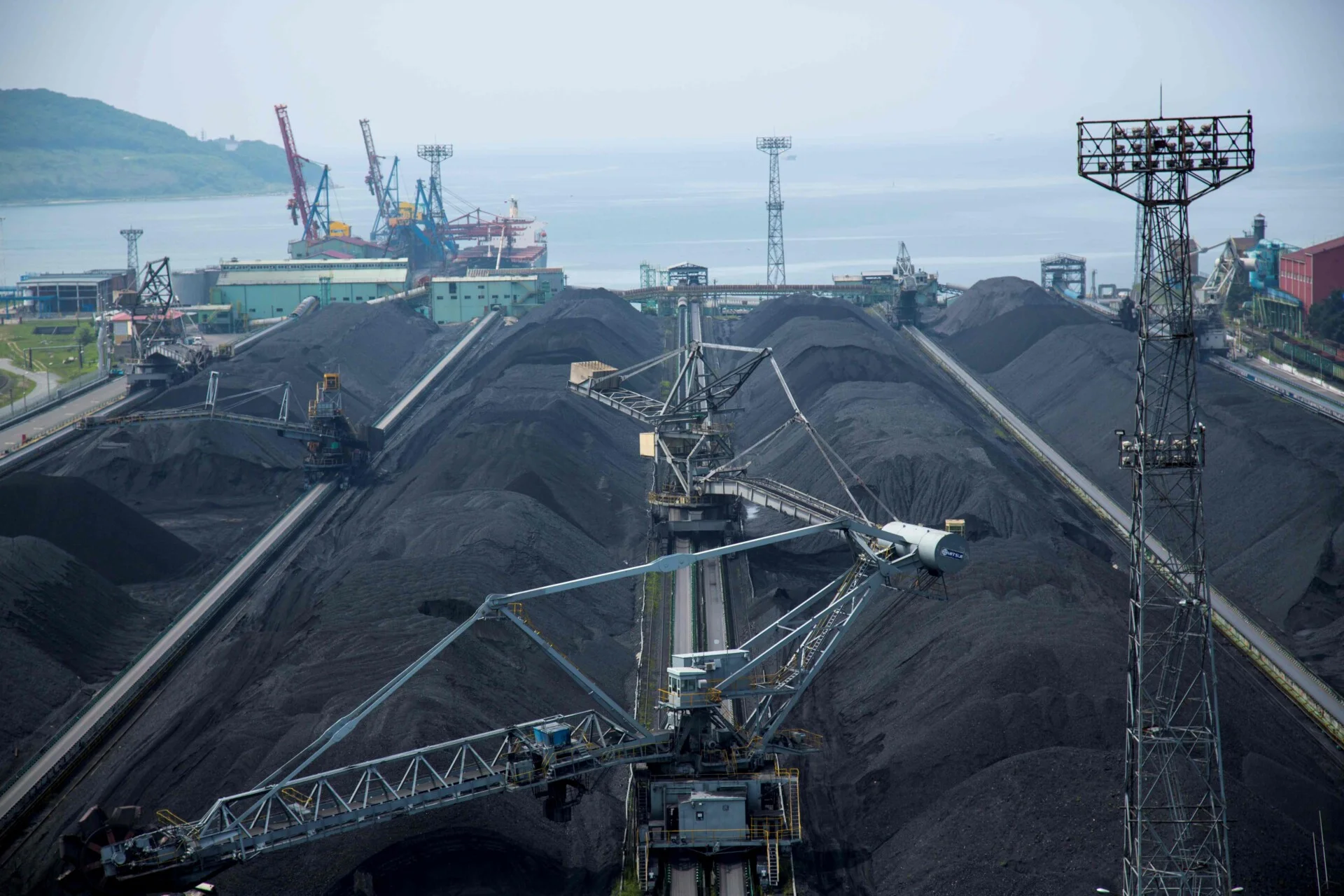
What’s keeping the market calm is inventory. DBX Commodities nowcasts port stocks at 66.8 Mt, with cover around 20% above the five-year average, so restocking urgency is low and seaborne thermal imports stay subdued. But a cushion is a buffer against a constrained supply base, not evidence of a comfortable one. It gets spent as winter restocking starts.
Downstream offers no relief either: August’s construction PMI slipped to 46.9, a new low for 2026, with manufacturing still in contraction at 49.8.
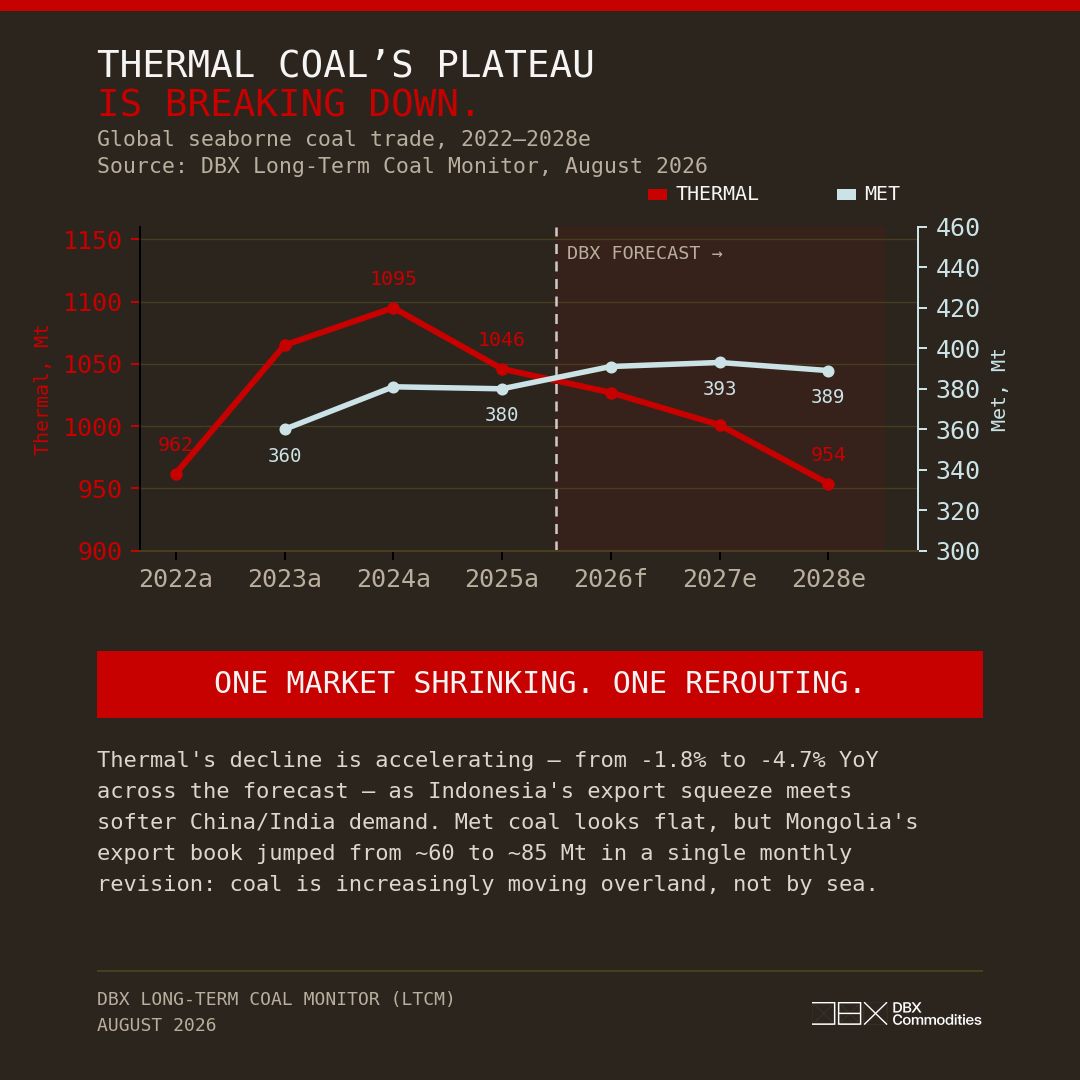
One risk that looks underpriced, on the met side: Mongolia supplies ~18% of China’s coal imports and close to half its coking coal — and takes ~97% of its own refined fuel from Russia, where diesel export restrictions now run through October. Mongolian pump prices have almost doubled since spring.
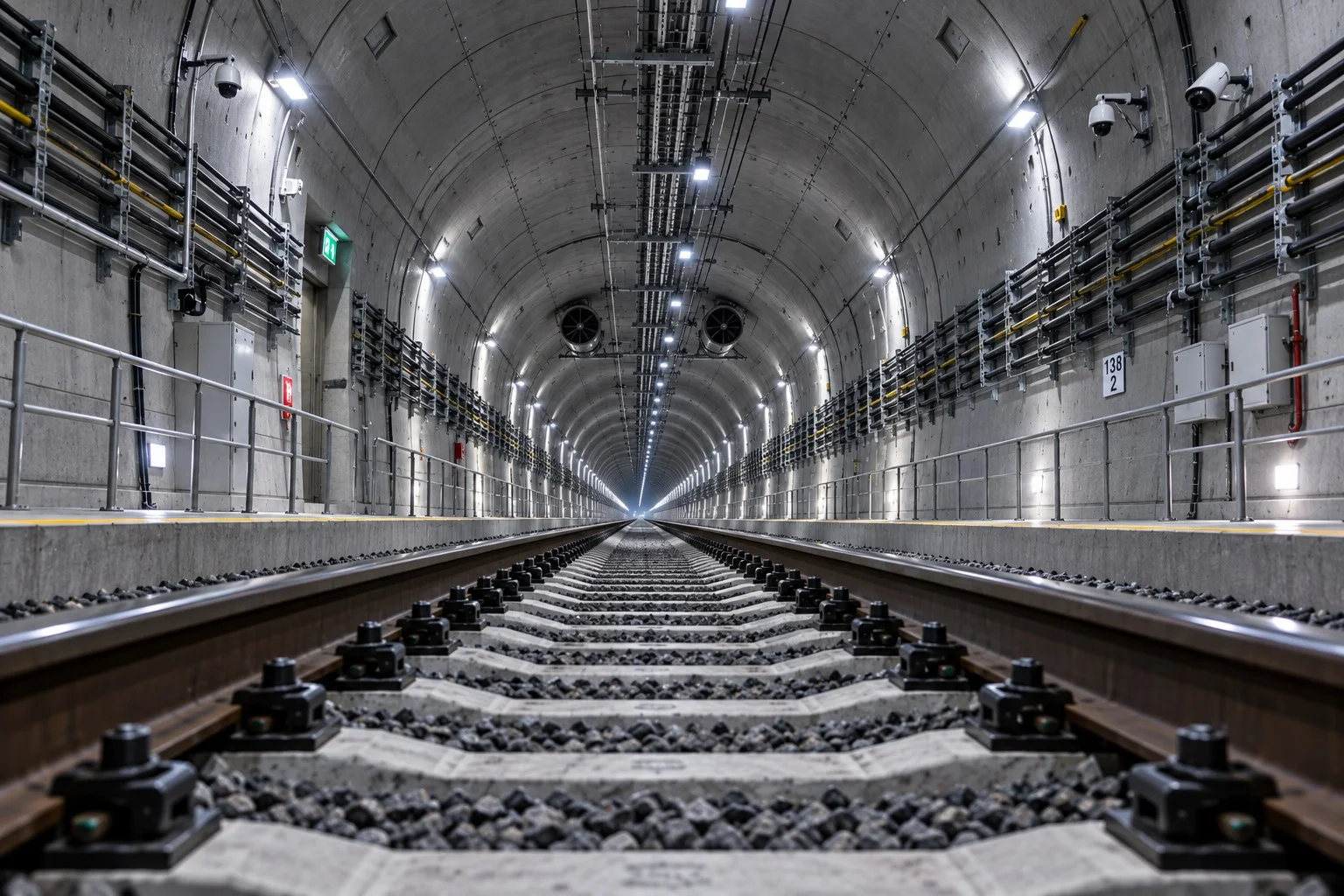
Coal exports are insulated so far. The exposure is the final cross-border trucking leg, which runs on thin margins and diesel. With the Gashuunsukhait–Ganqimaodu railway not in service until 2027, a fuel shortfall shows up as slower truck turnaround and higher delivered costs long before it shows up as lost production.
DBX Commodities’ view: rising but contained risk of cost-led disruption from October. Supportive for seaborne metallurgical demand into Q4 and 2027.
August power figures are reported actuals. September figures are DBX nowcasts, published ahead of the official data.
Source: DBX Commodities