Colombian coal exports could be influenced by the outcome of this week’s presidential election, with industry participants closely watching whether the next government adopts a more investment-friendly approach or continues the energy transition policies of recent years.
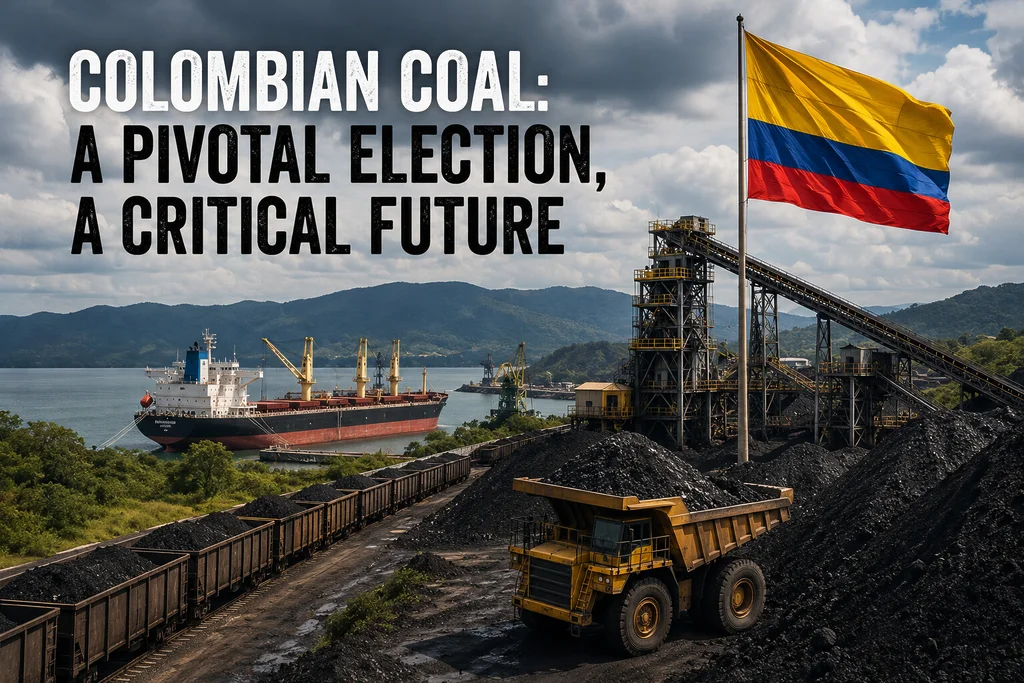
Colombia’s coal industry is approaching a pivotal political moment as the country heads to presidential elections that could influence the future direction of one of its most important export sectors.
Industry participants describe the vote as a referendum on the role of coal, mining and conventional energy within the Colombian economy after four years of President Gustavo Petro’s energy transition agenda. Market participants argue that regulatory uncertainty, environmental pressure and increasingly hostile rhetoric towards extractive industries have weighed on long-term investment planning and investor confidence.
Despite these challenges, coal remains a critical contributor to Colombia’s economy. The sector generated an estimated COP4.02 trillion (approximately US$1.09 billion) in royalties during 2025 and accounts for around 80% of total mining royalty revenues. Coal exports also showed signs of recovery in early 2026, with overseas shipments increasing compared with the same period a year earlier.
The election has effectively become a choice between continuing the current policy direction or adopting a more investment-friendly approach towards mining and energy development. Several candidates have pledged to restore regulatory certainty, encourage investment and recognise coal’s ongoing contribution to fiscal revenues, exports and energy security.
The outcome is being closely monitored not only within Colombia but also by international utilities, commodity traders and coal buyers that rely on Colombian thermal coal supplies. Market participants argue that policy stability will be essential if Colombia is to remain competitive against other major coal-exporting nations.
Beyond domestic politics, the debate reflects a broader challenge facing many resource-producing countries: how to balance decarbonisation ambitions with the economic realities of industries that continue to generate employment, export revenues and government income.
For Colombia’s coal industry, the election may prove to be one of the most consequential political events in recent years, helping determine whether the sector regains momentum or faces a more uncertain investment environment in the years ahead.
Source: McCloskey (OPIS), Colombia coal sector at election crossroads, 29 May 2026.