

India coal demand is strengthening, but imports have yet to fully respond, creating a growing imbalance that could trigger a step-change in seaborne coal flows.
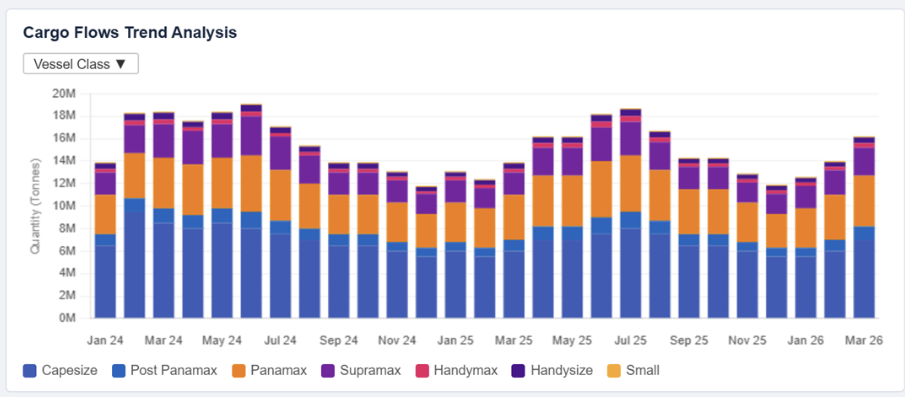
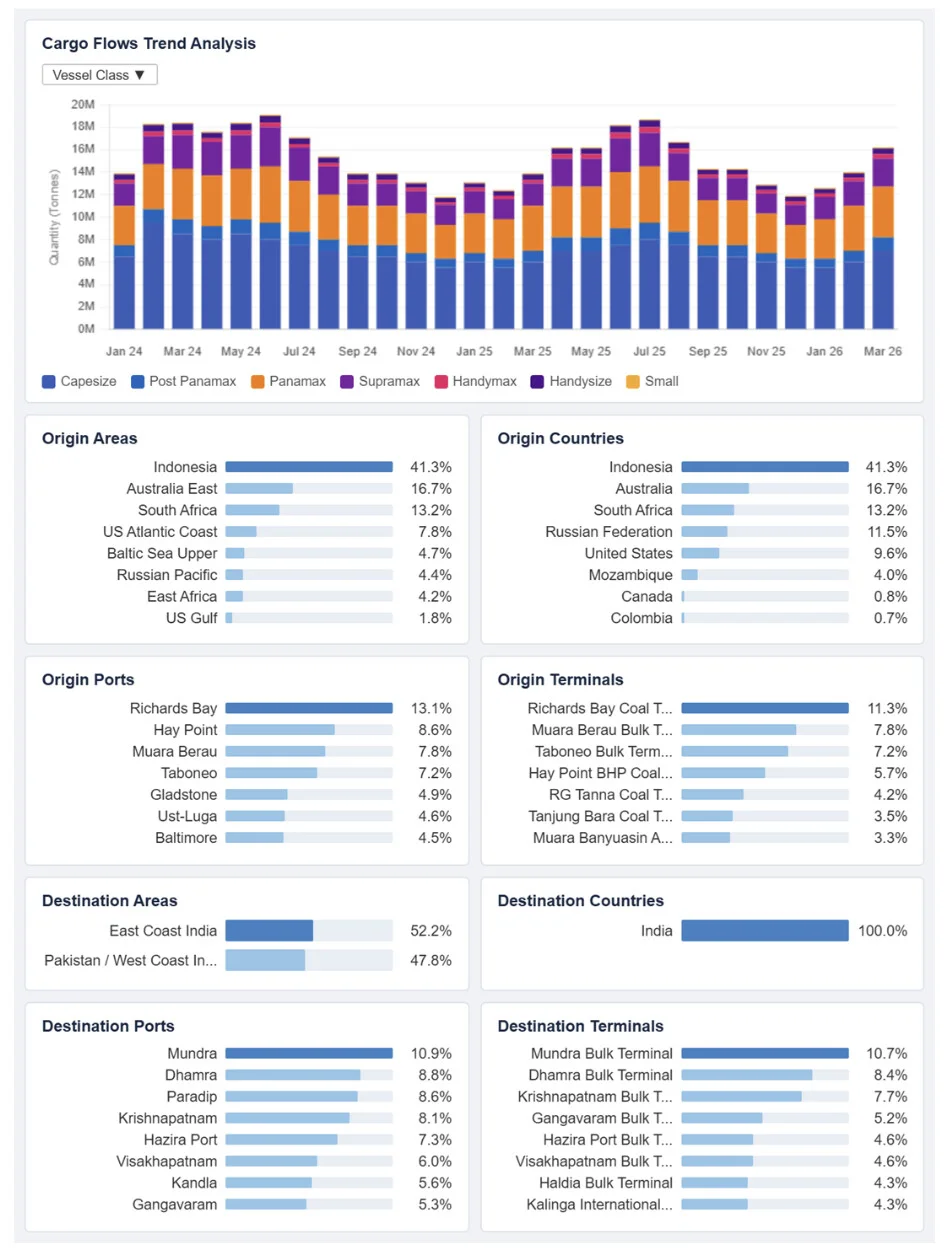
Recent data indicates that import flows began to recover into March 2026 after several months of subdued activity, suggesting that the current period of weak seaborne demand may be coming to an end.
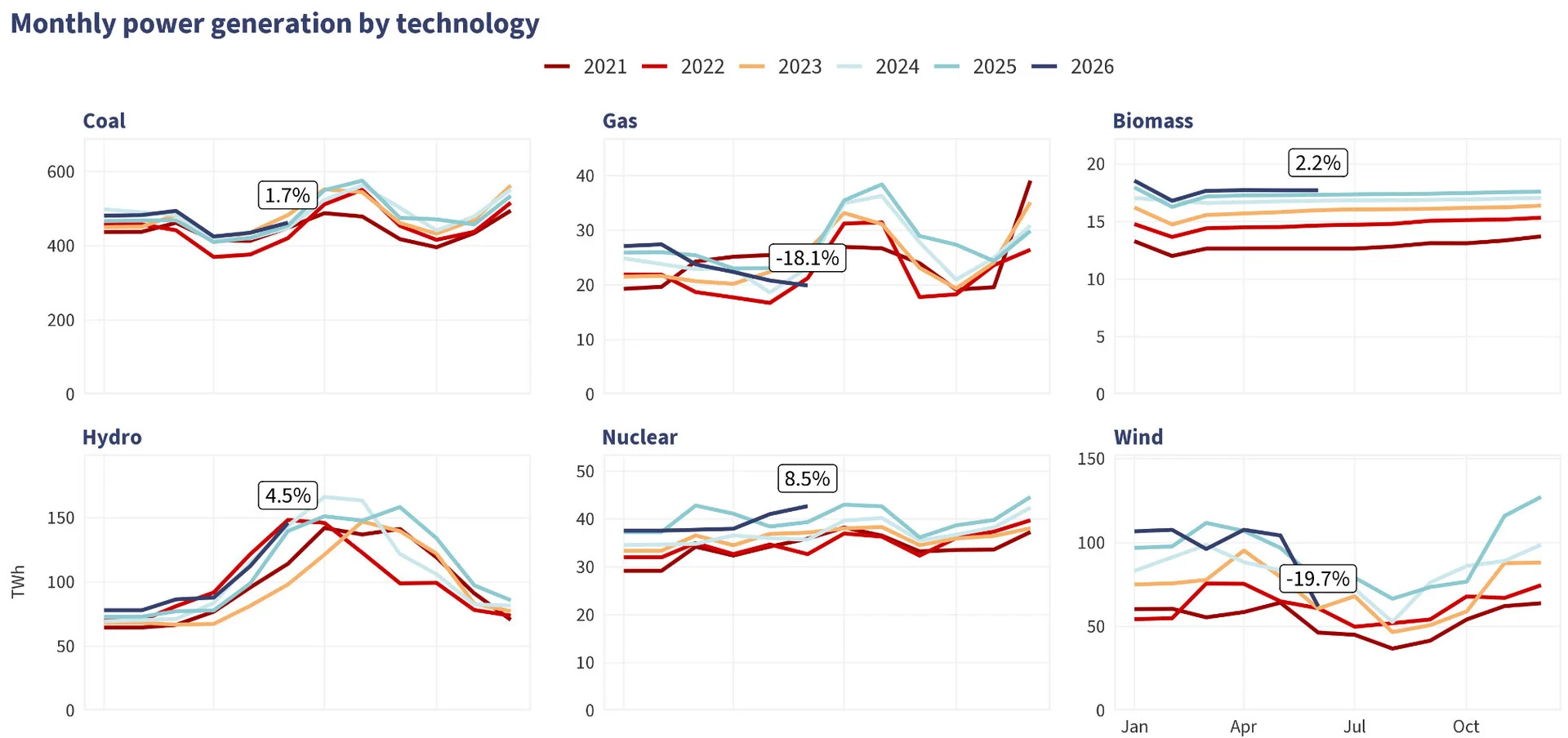
Underlying demand pressures are becoming increasingly evident. Seasonal heat is driving an early rise in electricity consumption, while disruptions in global gas markets have constrained LNG availability and affordability. As a result, coal-fired generation is taking on a larger share of the power mix.
Coal consumption at power plants is expected to increase by around 11.5% year-on-year to approximately 233 million tonnes in the April–June quarter, with peak power demand projected to reach around 270 GW.
Despite this, imports remain relatively muted due to elevated inventory levels. Coal stocks across mines, power plants and the broader supply chain are estimated at around 220 million tonnes, equivalent to roughly 24 days of consumption cover.
Domestic production remains strong, although output has shown some moderation amid high stock levels. This combination of robust supply and elevated inventories has delayed the response in seaborne markets, even as demand strengthens.
As inventories gradually normalise against a stronger demand backdrop, India is likely to re-engage more actively in the seaborne market.
Recent increases in import flows may represent an early indication of this transition, although a full restocking cycle is not yet evident.
Source: Signal Ocean