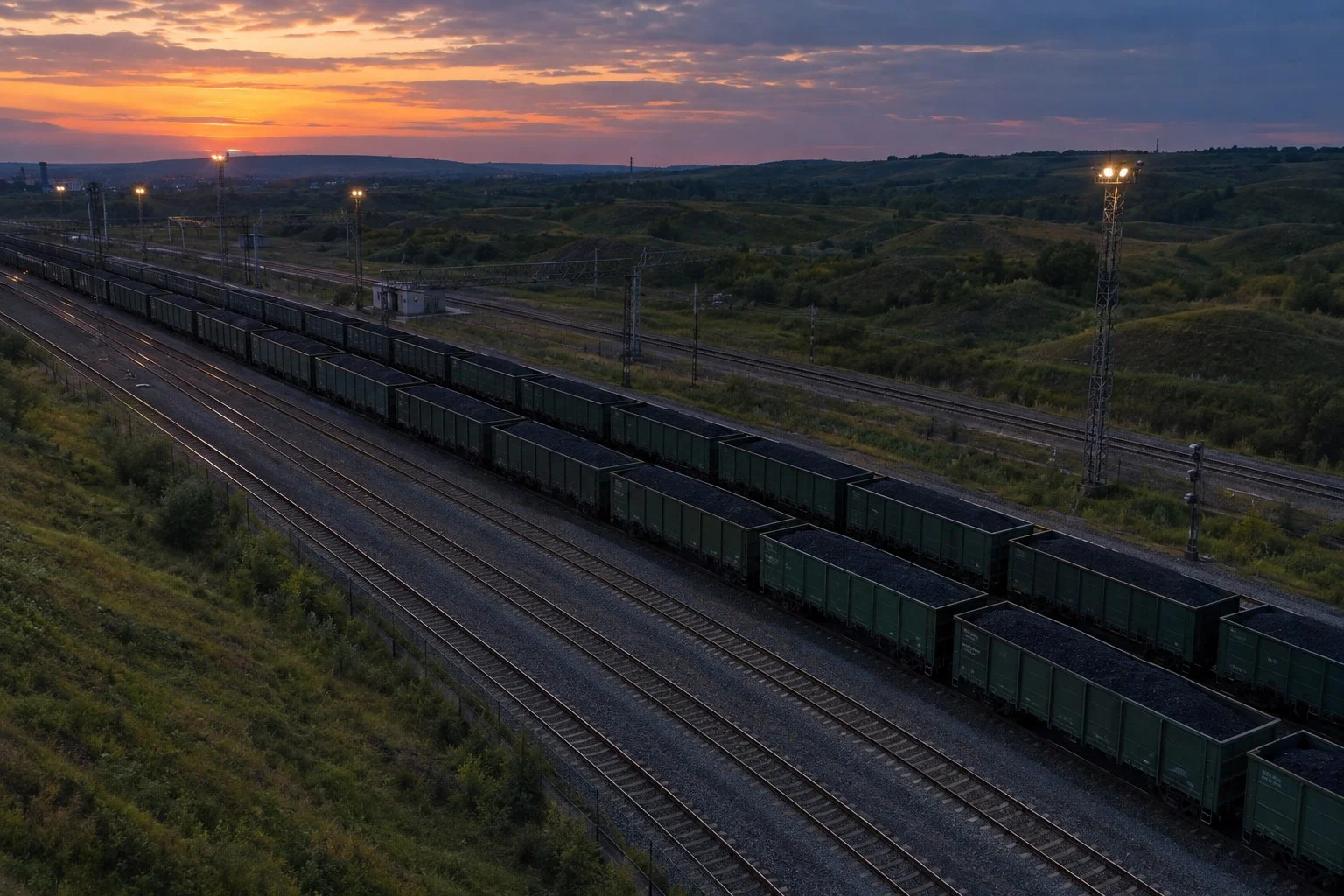
Global coal prices continued to rise over the past week across Europe, China, Indonesia, and Australia.
Over the past week, the upward trend in the coal market continued: indices rose in Europe; coal became more expensive in China, following the May 22 tragedy; in Australia, prices strengthened for both thermal and metallurgical material.
In the European coal market, spot quotations continued their advance to 128 USD/t. Supportive factors included expectations of higher solid fuel demand during the summer amid gas price volatility, stemming from uncertainty over the US-Iran crisis; physical market deals continued by a major international trader (two deals were recorded this week at 124 and 127 USD/t DES ARA for June delivery); and the Indonesian government’s plans to take control of coal export shipments.
Gas market in Europe remained highly volatile due to periodic exchanges of strikes between the US and Iran despite a previously announced truce, as well as news that Tehran had received an unofficial draft memorandum of understanding with the US under which Iran would commit within a month to restoring commercial shipping through the Strait of Hormuz to pre-war levels, while the US would lift its naval blockade.
Gas quotations on the TTF hub stood at 563.84 USD/1,000 m3 (-8.72 USD/1,000 m3 w-o-w). EU underground gas storage increased to 38.8% (+2.1 ppts w-o-w).
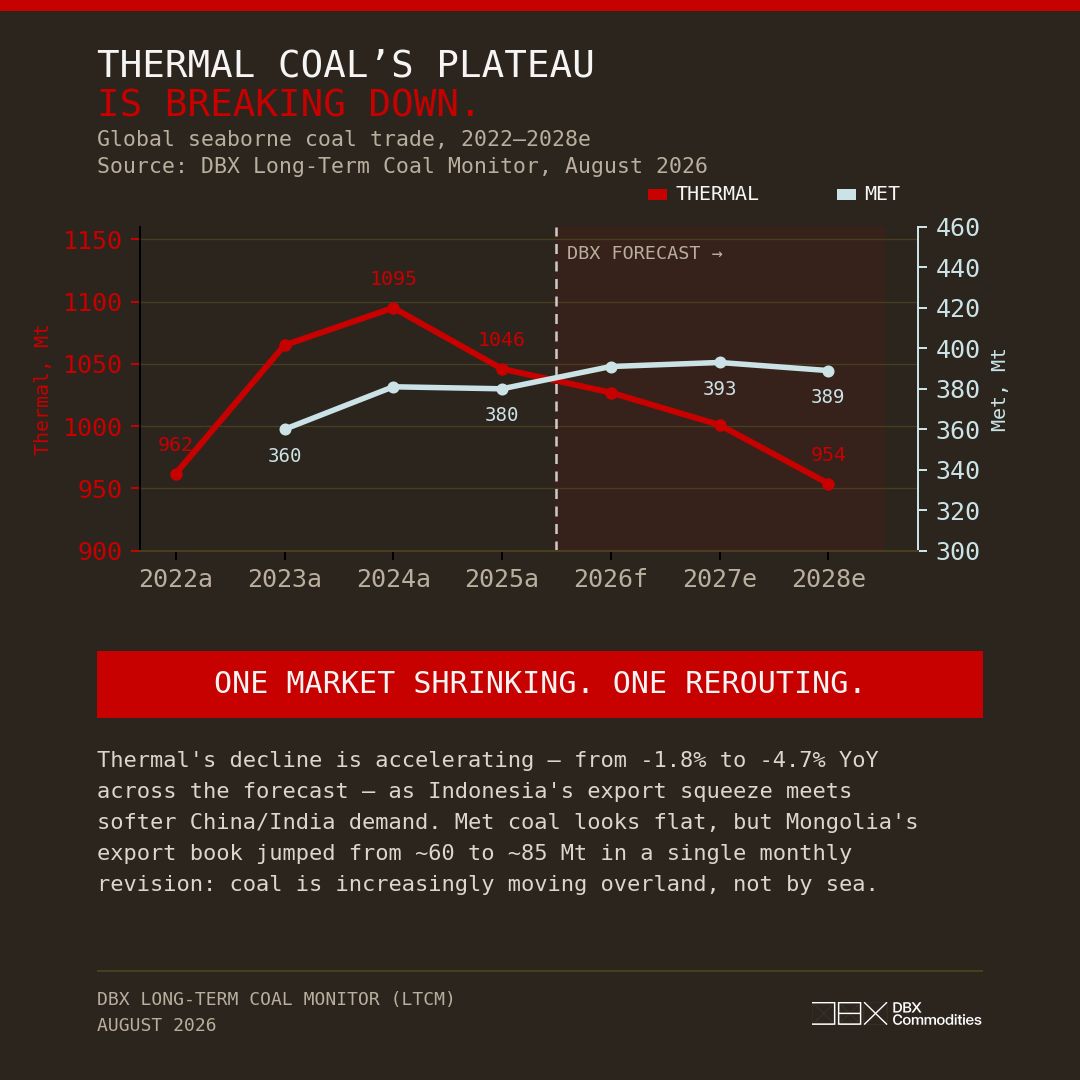
South African High-CV 6,000 corrected below 120 USD/t, continuing to hover near its highest levels in 2.5 years. Indices continue to find support from news of Indonesia’s plan to nationalize coal exports. Traditional buyers of Indonesian material may potentially shift to other supply sources. South African 4,800 NAR coal, in particular, competes with Indonesian coal in the key Indian market.
In India, thermal coal buyers continue to shun imports. Several sponge iron producers stated that a sharp drop in their product prices has made imported material somewhat unprofitable, prompting them to gradually scale back purchase volumes.
In China, spot prices for 5,500 NAR coal at the port of Qinhuangdao rose to 124 USD/t. Coal mining regions in China have stepped up safety inspections following a gas explosion on May 22 at the Liushenyu coal mine (metallurgical coal mine with 1.2 mio t/year capacity) in Shanxi province, which killed 82 people, left two missing, and injured 128.
The government ordered at least 118 enterprises in Shanxi province with total capacity of 134.5 mio t/year, mostly producing metallurgical coal, to suspend operations for safety checks. Similar suspensions and inspections followed in Shaanxi and Inner Mongolia. Experts estimate that China’s production could decline by 10-15 mio t in June alone. For the full year, coal output could fall 1-2% compared with the 4.83 billion tons mined last year, largely due to a 5-10% drop in coking coal production.
The thermal coal market is not expected to be impacted to the same extent, as China’s central government will continue its policy of ensuring adequate supply during the summer. Thus, the current price rally is likely to be short-lived: most suspended mines are expected to resume operations next week.
Coal stocks at 9 major ports increased to 28.32 mio t (+0.80 mio t w-o-w), while inventories at 6 major coastal thermal power plants stood at 13.44 mio t (+0.58 mio t w-o-w).
Indonesian 5,900 GAR climbed to 107 USD/t, while the price of 4,200 GAR strengthened to nearly 65 USD/t. Demand for Indonesian material is rising from Chinese consumers amid tighter safety inspections following the May 22 tragedy in Shanxi.
Market participants continue to analyze Indonesia’s plans to create a state body that will control all coal exports. According to a briefing by Indonesian authorities on May 26, exporters will be able to continue their normal activities from June 1 but must report deals to Danantara Sumber Daya Indonesia (DSI), providing the organization with all documentation, financial data, and counterparty information. From January 01, 2027, DSI is expected to take over as the official exporter for contracts, customs clearance, and payments.
Market participants generally view the government’s intentions negatively. Complaints include frequent policy changes in recent years: the introduction of HBA, domestic market obligation (DMO) rules, repatriation requirements for sales proceeds, and the 2022 export ban. Moreover, commercial complexity stemming from the heterogeneous nature of coal characteristics makes centralized sales — a key part of the DSI plan — impractical. Experts doubt that this policy will be implemented in its current form.
Australian High-CV 6,000 moved sideways at 133-134 USD/t FOB. Demand from Chinese consumers rose for Australian Mid-CV material. Bid prices for Australian 5,500 NAR coal climbed above 100 USD/t following the May 22 tragedy, compared with a 95-100 USD/t range last week.
Japan intends to temporarily suspend restrictions on low-efficiency coal-fired power plants (efficiency below 42%) in the current fiscal year from April 2026 to March 2027 to conserve LNG amid growing uncertainty over Middle East imports and ensure stable power supply. The move is expected to allow the country’s power sector to save approximately 500k t of LNG, equivalent to just over 10% of the 4 mio t/year imported through the Strait of Hormuz. This measure will increase Japan’s demand for high-CV thermal material.
Australia’s HCC metallurgical coal index remained at 241 USD/t. Nevertheless, the metallurgical coal market reacted to the May 22 tragedy at the Liushenyu mine in Shanxi with a jump in CFR China prices, as well as higher quotations for Australian LV HCC FOB Australia amid increased inquiries from Chinese counterparties.
Currently, concerns over supply disruptions are gradually easing, but spot prices in China’s domestic producing regions remain elevated due to supply shortages. The pace of gains on the Dalian Commodity Exchange futures has slowed, prompting many Chinese buyers to adopt a more cautious strategy toward expensive Australian cargoes.
Demand from India remained only for small volumes. Indian steel mills are struggling with low profitability and high exchange rates, which is impacting coking coal demand.
Source: CCA