PJM electricity generation during the first major U.S. heat wave of summer 2026 relied overwhelmingly on dispatchable power sources, with coal and natural gas providing the additional generation needed as electricity demand surged to near-record levels.
The first major heat wave of the 2026 U.S. summer pushed electricity demand across the PJM Interconnection close to record levels, providing another real-world test of how one of the world’s largest electricity markets responds under extreme conditions.
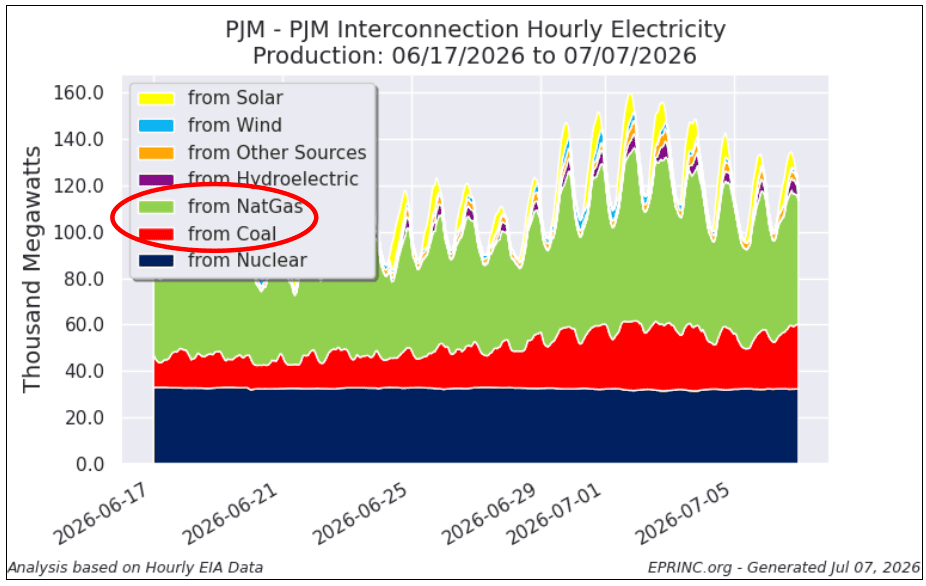
Serving around 67 million people across 13 states and the District of Columbia, PJM recorded demand approaching 160 GW, with a preliminary peak of around 163 GW on 2 July—just below the system’s all-time record set during the 2006 heat wave.
The data shows that dispatchable generation carried almost all of the additional load.
According to the analysis, nuclear, coal and natural gas together supplied around 88% of total generation during the heat wave. Natural gas averaged approximately 55 GW, while coal averaged 24.2 GW and nuclear provided a stable baseload of around 32.4 GW.
Coal recorded the largest relative increase. Average coal-fired generation rose by almost 69% compared with the previous week, climbing from 14.3 GW to 24.2 GW. Natural gas generation also increased significantly, rising by around 26% from 43.6 GW to 55 GW.
By contrast, combined wind and solar output remained broadly unchanged at around 7.5 GW, meaning the increase in electricity demand was met almost entirely by dispatchable generation rather than weather-dependent renewable resources.
The tight market prompted emergency action from the U.S. Department of Energy. On 30 June, emergency orders temporarily relaxed emissions restrictions for certain power plants and gave PJM additional authority to curtail very large electricity consumers if required to maintain system reliability. Despite wholesale electricity prices exceeding $2,000/MWh in parts of the market, PJM maintained grid stability without resorting to rolling blackouts.
The analysis also notes that PJM expects much of its future peak demand growth to come from expanding data centre capacity. As electricity demand continues to increase, periods of extreme weather are likely to place greater emphasis on dispatchable generation resources—including coal, natural gas and nuclear—to maintain grid reliability.
Source: Energy Policy Research Foundation (EPRINC) – Chart of the Week: First U.S. Summer 2026 Heat Wave: How Did PJM’s Grid Respond?